

Business leaders today need digital transformation leadership skills more than ever. Yet 60% of them don’t grasp what next-generation technology can do for their business. The numbers paint an even starker picture – only 13% know their next big tech investment. The old ways of leading just don’t work anymore in a business world driven by breakthroughs and disruption.
A Deloitte study shows that leaders must adapt quickly to handle tech advances, market shifts, and changing customer priorities. Being adaptable isn’t enough anymore. Success in digital leadership demands specific strategies that match digital transformation challenges. This piece will show you the key traits of successful digital transformation leaders. You’ll also learn practical ways to build your leadership skills as technology keeps changing business basics.
Why digital transformation demands new leadership skills
Business success in the digital era depends on new leadership approaches, not just technology adoption. Companies with leading digital and AI capabilities show two to six times better shareholder returns than their competitors, according to McKinsey research.
The shift from traditional to digital-first leadership
Traditional leadership models with hierarchical structures and centralized control become obsolete faster. Conventional executives relied on command-and-control mechanisms, while successful digital transformation leadership empowers teams through strategic use of technology. Digital leaders in banking achieved an 8.1% average annual shareholder return, which surpassed digital laggards who managed only 4.9%.
Modern executives face unprecedented pressure to deliver tech-enabled products. They must understand everything from cloud migration trips to enterprise architecture trade-offs. Business leaders need sophisticated technical knowledge to prioritize organization-wide rewiring that blends technology across core processes, rather than delegating technical decisions to IT departments.
Why adaptability alone is no longer enough
Adaptability remains essential but serves only as the starting point for successful digital transformation leadership. Nearly 88% of transformations fail to achieve their expected objectives, and about 95% of AI pilot projects haven’t delivered measurable value.
Modern executives must anticipate change, not just adapt to it. The most effective digital transformation leaders:
- Balance innovation with risk management and view security as a foundation that enables sustainable innovation
- Promote cultures of continuous learning where teams value experimentation and see failure as a chance
- Treat data as a strategic asset to make faster, informed decisions
- Show cognitive adaptability by naturally moving between strategic thinking and tactical execution while embracing ambiguity
Organizations that truly build adaptability into their operations continue to outpace those merely pursuing transformation. Forward-thinking leaders build intrinsic agility into daily operations, which allows their organizations to quickly rearrange in response to disruption.
Leaders also often discover that adaptability must be backed by execution capacity, which is why many organizations choose to rely on outsourced IT support to strengthen cybersecurity, manage infrastructure complexity, and support rapid experimentation without overstretching internal teams. This approach allows leadership teams to scale technical expertise on demand, access specialized skills that are difficult to hire internally, and maintain operational momentum while internal teams stay focused on strategic transformation initiatives.
Core traits of effective digital transformation leaders

Image source: Freepik
Digital transformation leaders stand out with unique traits that help them guide through complexity and create meaningful change. They differ from traditional executives who rely on industry expertise. Today’s digital leaders need specific abilities to succeed in our technology-driven world.
Vision and clarity in uncertain times
A compelling shared vision that brings stakeholders together forms the foundation of effective digital transformation. Many organizations fail because they don’t define their destination, its importance, and their unique position to take this journey. Strong leaders state this vision beyond buzzwords. They create stories that appeal to their organization’s future. They know this vision needs everyone’s support – not just from executives but from all levels of the company.
Comfort with emerging technologies
Digital leaders combine business sense with a deep grasp of changing technologies. They don’t need to create technical solutions themselves but must understand how technologies work to get the most value. Their passion for technology keeps them ahead – they love exploring new innovations to stay competitive. These leaders know exactly where their companies need to stand out versus where they can use proven solutions.
Customer-centric decision making
Customer expectations change faster than technology itself and drive transformation. Smart leaders look at their business from the outside, understanding market changes deeply. On top of that, they see digital tools as means to an end – these tools only matter when they improve customer outcomes. Companies that put customers first see real benefits. Experience-focused businesses grow 1.4 times faster and boost customer lifetime value 1.6 times more than their rivals.
Commitment to continuous learning
Transformation needs ongoing education and skill growth at every level. Digital leaders develop environments where teams can experiment and learn from failures. So, they show curiosity themselves – great leaders keep exploring new technologies, read widely, and look for chances to learn. This dedication creates advantages that go beyond transformation and shape the company’s strategy. By embedding continuous learning into daily workflows rather than treating it as occasional training, organizations build long-term resilience and ensure their workforce evolves alongside technology.
Building leadership agility in a digital world
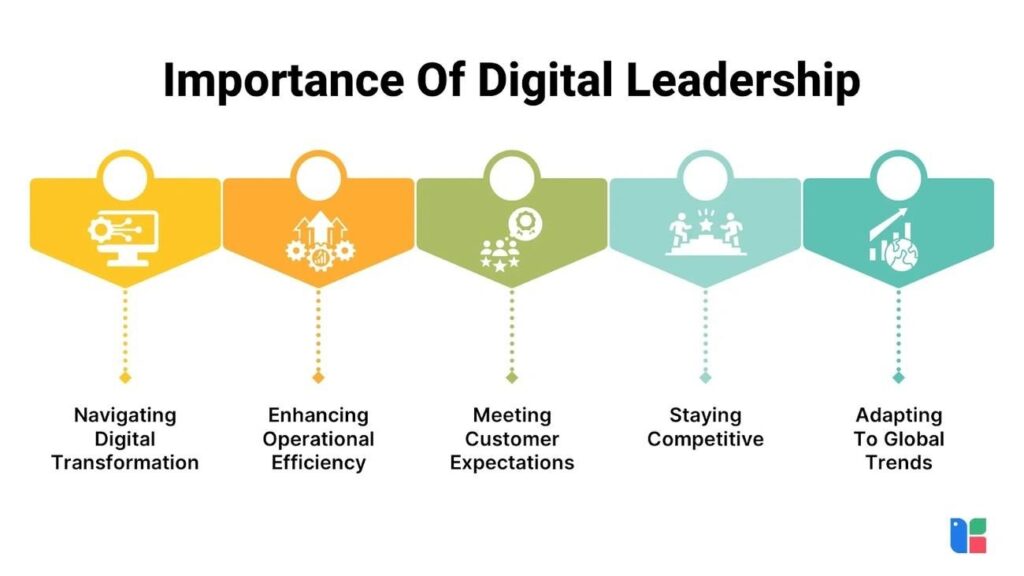
Image Source: Kapable
Leadership agility has become the key to successful digital transformations, surpassing strategy in importance. Companies know they need to transform, yet many fail because their leadership remains stuck in old ways of thinking.
What is leadership agility?
Leadership agility covers three vital skills: ecosystem awareness, evidence-based decision making, and quick execution. Agile leaders scan their environment constantly, process new information quickly, and implement changes based on fresh insights. Research from IMD Business School reveals that organizational and leadership agility, not strategy, serves as the foundation for successful digital transformation.
Developing a growth mindset
A growth mindset forms the base of leadership agility – believing that people can develop talents and skills through learning and persistence. Companies with strong experimental cultures consistently outperform market measures and make smarter strategic choices. Growth-oriented executives stand apart from those who maintain the status quo by:
- Showing natural curiosity and continuous learning
- Seeing problems as opportunities instead of threats
- Recovering quickly from setbacks
Encouraging experimentation and fast feedback
Digital transformation leaders must create environments where state-of-the-art ideas flourish. Studies show that 93% of workers in all industries believe digital skills are crucial to perform well in their roles. Leaders who get results establish quick experimentation as the core of digital innovation. Success starts with creating a safe space where teams feel confident taking calculated risks and learning from failures.
Balancing short-term action with long-term vision
Maintaining balance between current needs and future goals presents the biggest challenge in digital transformation leadership. Successful leaders create two parallel tracks: they dedicate resources to current revenue while keeping teams focused on long-term innovation. These leaders break down transformational visions into concrete projects with clear milestones, so quick wins build toward long-term goals. They connect day-to-day metrics to strategic outcomes by showing how specific process improvements support broader organizational objectives.
Strategies to lead successful digital transformation
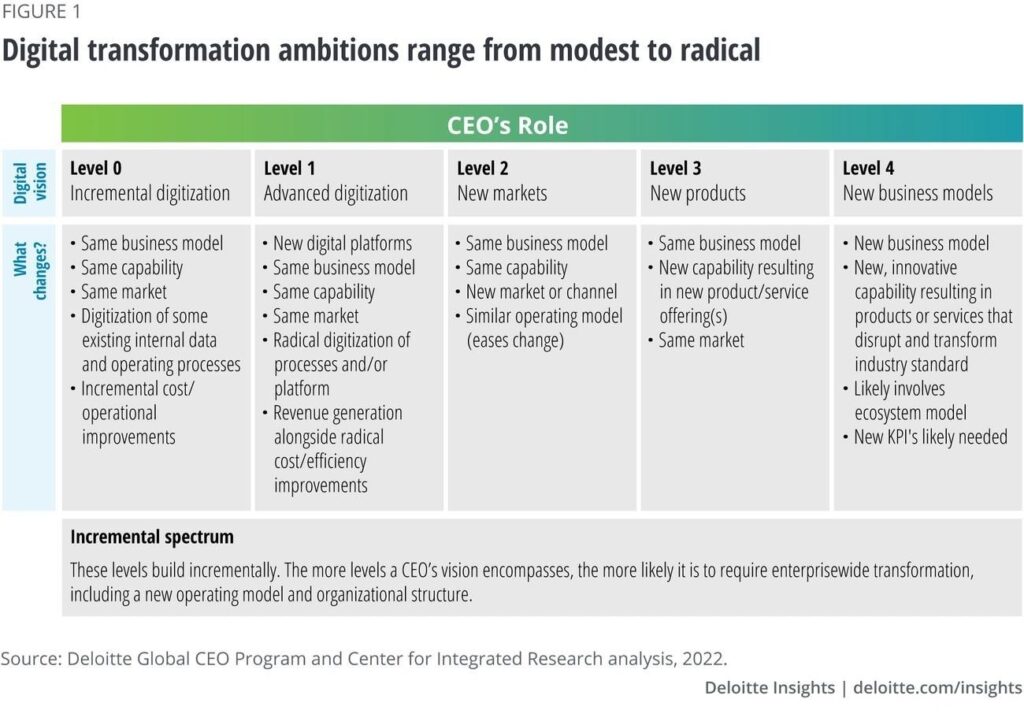
Image Source: Deloitte
Digital transformation success depends on leadership strategies that bring real change. McKinsey research shows that 21 key practices can improve transformation success rates. Below listed are some of the most important among them:
Encourage a culture of innovation
An innovation-driven environment is the life-blood of digital transformation. Organizations need a clear vision that connects with emotional involvement. They should recognize that innovation happens both in small steps and big leaps. Setting up structured innovation programs helps 75% of market leaders grow, scale, and become resilient.
Make use of information for smarter decisions
Companies that rely on evidence-based decisions are three times more likely to make better choices. Start by turning your data into visual charts and graphs to spot trends. Then apply critical thinking to find actionable solutions. Finally, set up metrics to measure how using data affects your transformation goals.
Invest in digital tools and platforms
Companies succeed when they use digital self-serve technologies and update their standard procedures with new tech. This approach doubles the chances of transformation success. These platforms help businesses automate processes, improve customer experiences, and run better operations.
Strengthen cross-functional teams
Teams working across departments break down the organizational barriers that slow digital progress. These teams adopt technology 34% faster than isolated departments. Dedicated transformation teams help break through department boundaries and create an agile organization.
Conclusion
Digital transformation leadership is no longer something executives can delegate or learn passively over time. It shapes how decisions are made, how teams collaborate, and how organizations respond when uncertainty becomes the norm. Leaders who treat transformation as an ongoing responsibility rather than a one-time initiative are far better positioned to stay relevant as technology, customer expectations, and competitive pressures continue to evolve.
What ultimately separates strong digital leaders from struggling ones is intention. The most effective executives make space to rethink assumptions, challenge legacy habits, and invest in capabilities that may not deliver immediate results but create long-term resilience. They recognize that progress rarely follows a straight line and that meaningful change often comes from consistent, well-directed effort rather than dramatic overhauls.
As digital disruption accelerates, leadership itself becomes the competitive advantage. Organizations that thrive will be led by executives who remain curious, decisive, and grounded in purpose even as conditions shift. By strengthening their ability to lead through complexity, today’s leaders can build businesses that are not only prepared for change but capable of shaping what comes next.