
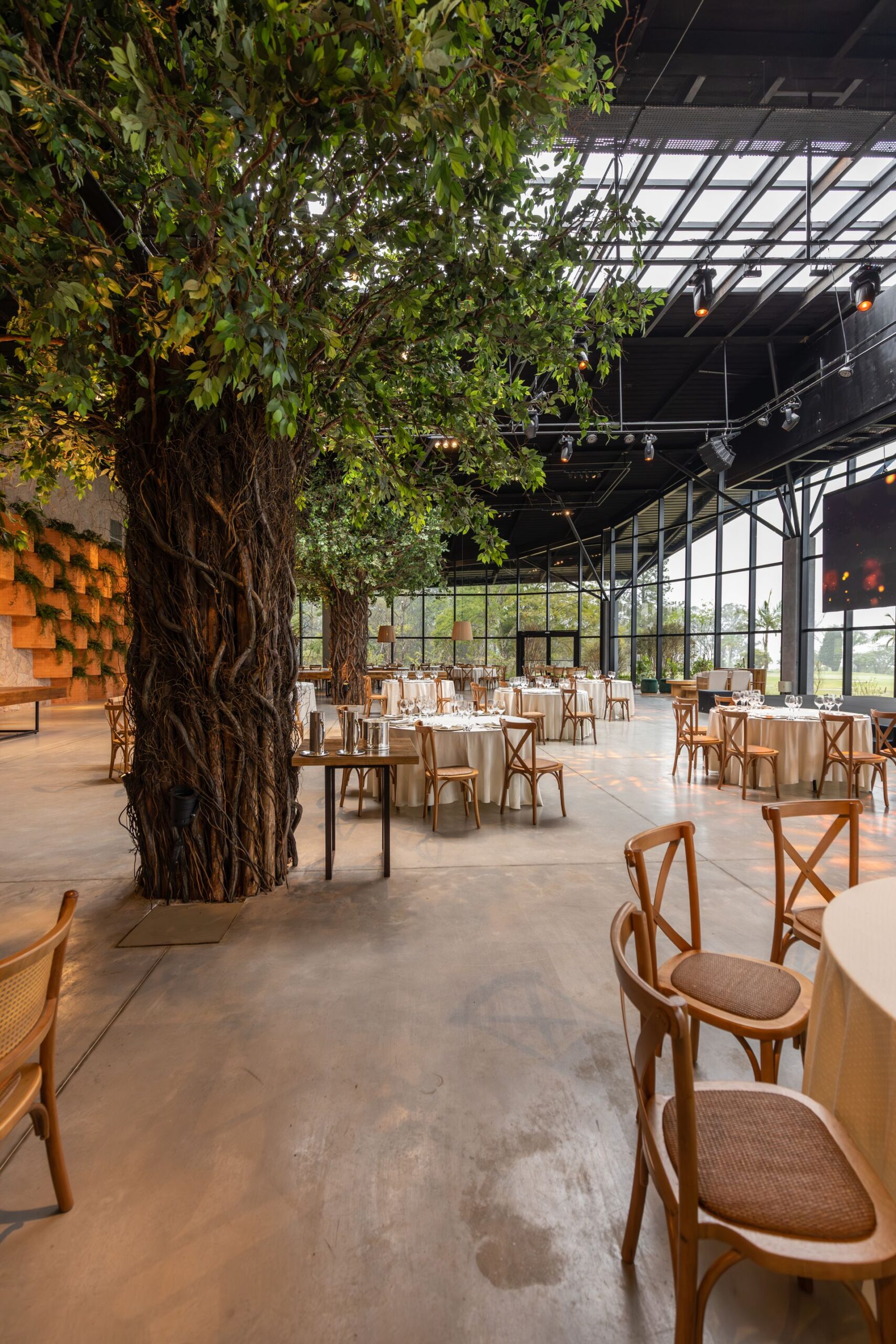
What happens to a beautiful, purpose-built ballroom once the market shifts and demand for that exact format starts to fade? Increasingly, nothing good, since a space built for only one kind of event struggles the moment the industry moves on. That rigidity is exactly what’s pushing event planners, brands, and venue operators toward a different model entirely, one built around adaptability rather than a single fixed use.
According to Forbes, businesses are increasingly investing in immersive venues because engaging, memorable environments help attract visitors, encourage longer stays, and generate stronger customer engagement, demonstrating the growing value of experience-driven spaces.
Flexible event spaces, venues designed or adapted to serve dramatically different purposes depending on what’s needed, have moved from a niche advantage to something much closer to an industry expectation. Understanding why helps explain the shift happening across event planning right now.
Demand for Customized Experiences Has Reshaped What Brands Expect
Brand experiences today are built around a specific story, not a generic template that could belong to any company. Event planners increasingly need a space that can be shaped around that story rather than forcing the story to fit a fixed room.
A flexible venue gives brands the raw material to build something genuinely customized, adjusting layout, lighting, and staging to match exactly what a specific activation requires. This shift away from one-size-fits-all venues reflects how much brand experiences themselves have grown more specific and demanding.
Flexibility Creates a Real Financial Advantage
A venue built for only one narrow purpose is financially exposed the moment that specific format falls out of favor. Flexible spaces spread this risk across multiple event categories, corporate events, brand activations, film and photo production, rather than depending entirely on one market staying strong.
This diversification means a flexible venue can stay booked and profitable even as trends shift within the broader events industry. Venue operators increasingly see this adaptability as a core financial strategy, not just a creative nice-to-have.
Adaptive Reuse Turns Underutilized Real Estate Into Valuable Venues
Many of today’s most compelling flexible venues began as underutilized commercial or industrial spaces, not purpose-built event halls. Repurposing this kind of real estate into a dynamic venue creates genuine value from an asset that would otherwise sit empty or underperform.
This approach also gives events access to architecture and character that simply can’t be replicated in new construction, since these buildings carry real history. Adaptive reuse has become one of the more significant shifts in how flexible event spaces actually come into existence.
Distinctive Architecture Has Become a Genuine Differentiator
A converted historic building or an architecturally significant industrial space offers something a purpose-built convention hall simply cannot, a genuine sense of place that becomes part of the story an event tells. This distinctiveness has become a competitive advantage in a market where events increasingly compete for social media attention and press coverage.
Venues with real character command a premium precisely because they can’t be replicated at scale by a new development. Brands are increasingly willing to pay for this authenticity rather than settle for a generic, replaceable space.
Multi-Format Bookings Have Become the Norm, Not the Exception
A single event today often needs to function as several things at once within one booking, a press event, a photo backdrop, and a hospitality space all in the same evening.
- Press events paired with product reveals — A single space now often needs to handle media coverage and a formal unveiling back to back.
- Photo and film production alongside live events — Brands increasingly want a venue that supports both a live audience and content capture simultaneously.
- Hospitality spaces built into larger activations — Guest lounges and dining areas are now commonly expected within the same footprint as the main event.
- Rapid turnover between formats — Venues are expected to transform from one use to another within the same day, sometimes within hours.
This blending of formats within a single booking is exactly why rigid, single-purpose venues increasingly struggle to keep up with what modern events actually require.
Choosing an Event Partner That Understands Your Goals
Finding the right flexible venue starts with finding a partner who genuinely understands what a specific brand or event is trying to accomplish, not just a space for rent. A venue operator who asks the right questions about a brand’s story and goals tends to deliver a space that actually serves the event, rather than one that simply looks impressive in photos. This kind of partnership matters considerably more than square footage or a polished brochure, since the value of a flexible space comes from how well it’s actually shaped around a specific need.
The relationship between a venue and an event team can determine how effectively a space reflects a brand’s vision. Skylight works with organizations to turn distinctive real estate into tailored event settings, allowing the venue itself to become part of the overall experience rather than just a backdrop.
How to Choose the Right Flexible Event Space
Not every flexible venue delivers on its promise equally, and a few specific factors separate a genuinely adaptable space from one that only looks flexible on paper.
- Infrastructure built for transformation — Confirms the venue can genuinely support different layouts, not just different furniture arrangements.
- A track record across multiple event types — Shows the space has actually delivered for brand activations, film production, and corporate events alike.
- Architectural character worth building a story around — Distinguishes a venue with real presence from a generic, forgettable room.
- Responsive, hands-on venue management — Ensures quick turnaround when an event needs adjustments during planning or on the day itself.
Weighing these factors carefully tends to reveal which venues are genuinely flexible and which are simply marketed that way.
Final Thoughts
Flexible event spaces have become the industry standard because they solve real problems, financial risk, creative limitation, and the growing complexity of modern events. Choosing a venue and a partner built around genuine adaptability, rather than a fixed idea of what an event should look like, is what allows a space to actually deliver on its full potential. The brands and planners who benefit most are usually the ones who prioritize this kind of fit over square footage or a polished brochure alone.