
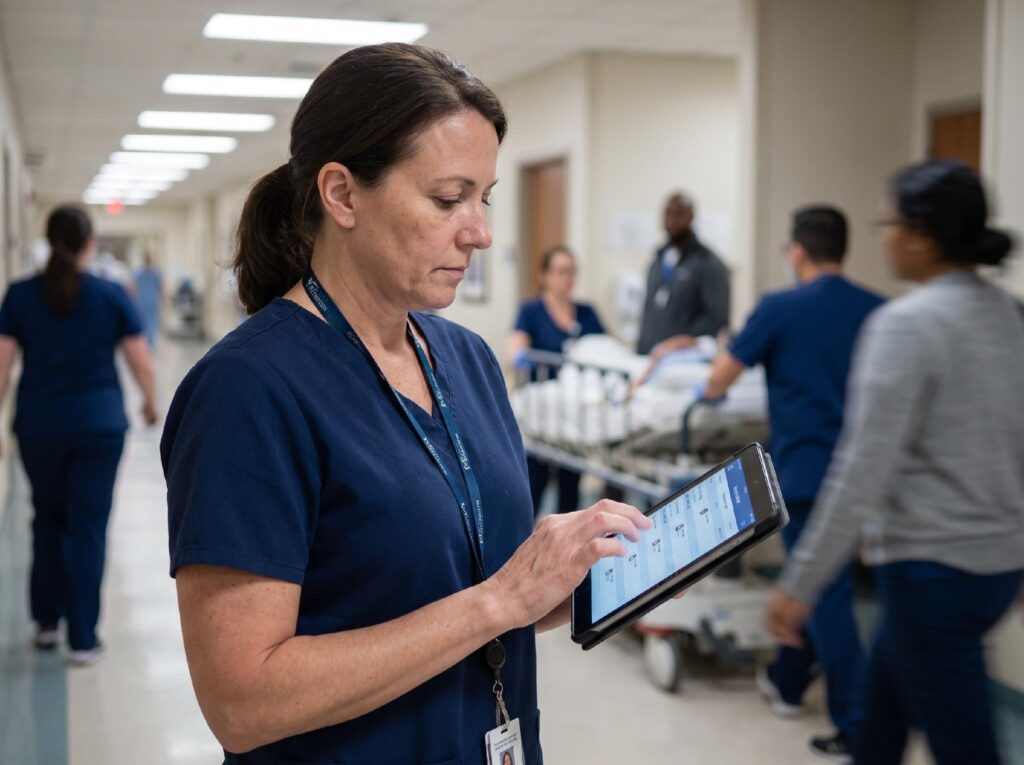
Ask a nurse leader what keeps them up at night, and the answer rarely changes. It’s not budget cycles or patient satisfaction scores. It’s whether tomorrow’s shift will be covered. According to the American Organization for Nursing Leadership’s 2026 Nursing Leadership Insight Study, the highest-response survey of its kind to date, staff recruitment and retention ranks as the top challenge facing nurse leaders, and the top three challenges are all staffing-related.
That’s telling. Staffing has quietly moved from an operational headache handled by HR to a strategic problem that sits on the desks of executives and department heads. The leaders who treat it that way, rather than delegating it entirely to recruiters, are the ones building organizations that can absorb the shock of a shift cancellation without incurring a patient-safety risk.
This isn’t a story about hiring more people faster. It’s about how healthcare leadership itself has to change to meet the needs of a workforce that no longer behaves as it did a decade ago.
Why Staffing Has Become a Top Leadership Priority in 2026
The scale of the problem explains why it climbed the priority list. The nationwide nursing shortage rate is projected at 8.06% in 2026, according to HRSA data compiled by Nightingale College, with the LPN shortage running as high as 20% in some states and the RN shortage near 10%. Those aren’t abstractions for a facility director. They’re the difference between a fully staffed med-surg floor and a unit running on mandatory overtime.
The exit numbers make it worse. By 2027, an estimated 800,000 RNs and 184,000 LPNs and LVNs plan to leave nursing altogether, roughly 20% of all licensed nurses in the country. Burnout is doing a lot of that work. When a facility loses a fifth of its workforce over a few years, no recruiting sprint fixes it. What fixes it is a leadership team that treats workforce stability as a board-level metric, tracked with the same rigor as readmission rates or patient throughput.
That’s the shift happening at well-run facilities right now. Staffing strategy is evolving from an HR function to a leadership competency, and the executives who get there first will spend less time firefighting in 2026 than those who don’t. Some are already rebuilding their staffing model around platforms like Nursa, an on-demand healthcare staffing platform that connects facilities directly with license-verified clinicians for per diem shifts, rather than waiting on the traditional agency pipeline to catch up with demand.
The Shift From Reactive Hiring to On-Demand Staffing Models
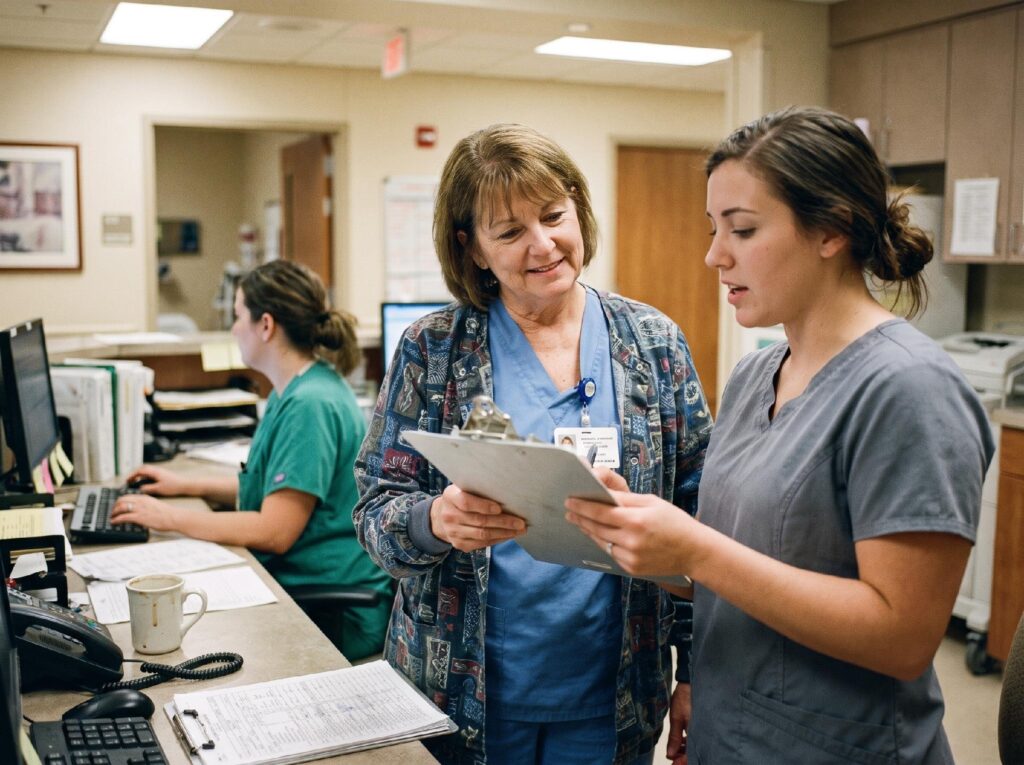
Traditional staffing models were built for a workforce that no longer exists. The old playbook- post a job, wait weeks, run background checks, spend three months orienting a new hire- worked fine when nurses stayed at one employer for a decade. It doesn’t work when facilities need to fill a Tuesday night shift by Monday afternoon.
The onboarding math alone should worry any facility leader. Hospitals typically need about three months to bring an experienced RN fully up to speed, and orienting each new nurse costs facilities somewhere between $60,000 and $80,000. Multiply that by the churn rate healthcare is currently absorbing, and reactive hiring becomes one of the most expensive ways to run a staffing department.
Forward-thinking leaders are responding by building flexibility into their staffing model itself, not just their job postings. On-demand platforms let facilities post open shifts directly to a pool of licensed, verified clinicians who pick up per-diem work when it fits their schedules. Instead of routing every open shift through a staffing agency and absorbing a markup on top of the wage, facilities connect with available nurses directly, often filling a shift in hours rather than weeks. For a leadership team trying to avoid another round of mandatory overtime, that kind of speed changes the calculation entirely.
The point isn’t that every facility should abandon full-time hiring. It’s that leaders who build a flexible layer into their staffing strategy have a shock absorber that rigid-model facilities don’t.
What the Data Says About Flexibility vs. Pay
Here’s a number that should reorder most retention strategies: 78% of healthcare workers rank flexibility as a top factor in their workforce decisions, compared to just 17% who rank pay as the top factor, according to StaffDNA’s 2026 healthcare staffing trends report. The same survey found that 98% of healthcare workforce respondents reported a surge in demand for flexible, gig-style work arrangements over the past one to two years.
That’s a significant reversal of what most retention playbooks still assume. Facilities have spent years competing on sign-on bonuses and hourly rate bumps, while the workforce itself has been signaling that control over one’s own schedule matters more. Employers are starting to notice. Roughly 36% of healthcare employers report moving toward more flexible or gig-based employment models, per a 2026 industry workforce trends analysis from FADV.
None of this means pay stops mattering. It means pay alone won’t retain nurses who feel trapped by rigid scheduling. Leaders who keep raising wages while leaving scheduling untouched are solving the wrong half of the problem, and the data increasingly backs that up.
Building a Resilient Leadership Approach to Workforce Disruption

Staffing volatility is just one form of disruption healthcare leaders are navigating right now, alongside reimbursement changes, technology adoption, and shifting patient expectations. The leaders who handle it well tend to share a trait that goes beyond staffing tactics: they build organizational resilience as a deliberate practice, not a reaction to crisis.
That’s consistent with what we’ve explored in rethinking how leaders approach workforce trends more broadly. Flexibility, autonomy, and technology-enabled work aren’t healthcare-specific trends. They’re reshaping how every industry thinks about talent, and healthcare leaders who stay current on that broader shift make better staffing decisions because they understand the workforce psychology behind it.
The stakes of getting this wrong go beyond operations. Research from Tulane University’s School of Public Health and Tropical Medicine has documented how chronic understaffing degrades patient care quality and increases clinical errors. That’s the real cost of a leadership team that treats staffing as someone else’s problem.
Leaders who instead approach workforce disruption the way they’d approach any strategic risk, with contingency planning and a willingness to change the model when it’s not working, tend to build the kind of organizational resilience we’ve written about in building resilience during periods of disruption. Staffing agility is simply resilience applied to the workforce.
Practical Steps for Healthcare Leaders in 2026
Facility leaders looking to close the gap between where their staffing strategy is and where it needs to be can start with a few concrete moves:
- Build a flexible staffing layer into the model, whether through per diem platforms, internal float pools, or both, so a single canceled shift doesn’t cascade into a coverage crisis.
- Track workforce data the way finance teams track revenue: turnover by unit, time-to-fill by role, and overtime hours as leading indicators, not lagging complaints.
- Put scheduling autonomy on equal footing with pay in retention conversations. The data suggests that’s where nurses are actually making decisions.
- Review staffing strategy at the executive level on a recurring basis, not only when a crisis forces the conversation.
Federal guidance backs up a version of this approach. The ASPR TRACIE healthcare workforce strategies resource outlines similar principles for managing surges in provider demand, and it’s worth a look for any leadership team building out a formal contingency plan.
Conclusion

The facilities that come out ahead in 2026 won’t necessarily be the ones that pay the most. They’ll be the ones led by executives who stopped treating staffing as a back-office function and started treating it as a leadership discipline. That means tracking the right data, building flexibility into the model before a crisis forces it, and recognizing that a nurse choosing autonomy over a marginal raise isn’t a retention failure; it’s a signal.
Healthcare leadership has always been about making good decisions under pressure. Right now, staffing is where that pressure is concentrated, and the leaders willing to rethink the model, not just work harder within it, are the ones who’ll spend less of 2026 in crisis mode.