(photo credit: Microsoft Stock Images)
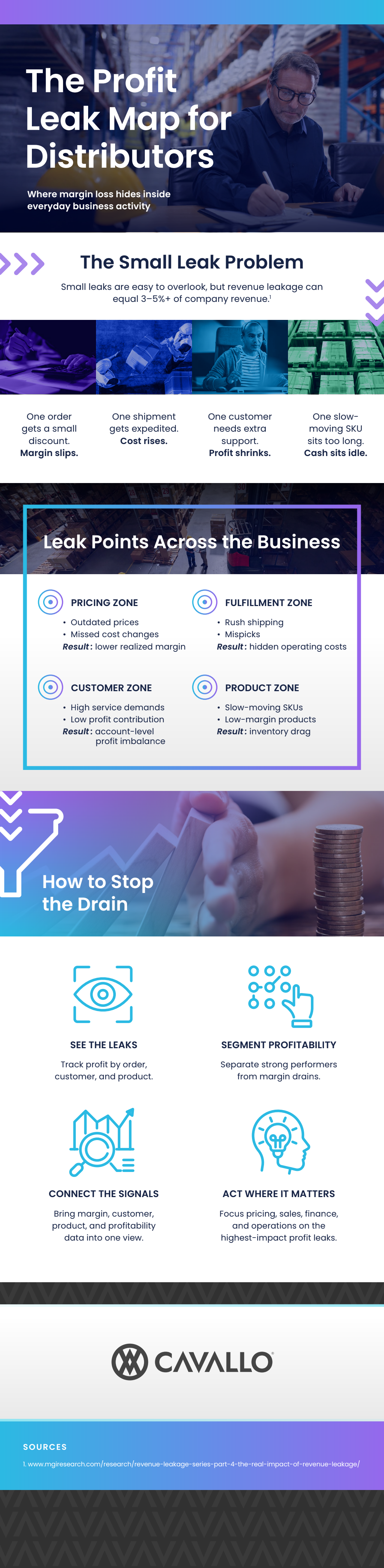
A distributor can post higher sales and still wonder why those gains are not reaching the bottom line. The explanation is often found in small losses scattered across the business. A discount gets approved without considering freight. Slow inventory occupies warehouse space for another year. A customer places frequent small orders that cost more to process than expected. Individually, these decisions may seem insignificant. Together, they can quietly consume a meaningful portion of the margin.
Pricing Can Hide Expensive Exceptions
A standard gross margin calculation does not capture every cost associated with serving an account. Two customers purchasing the same amount may generate very different profits.
Consider a customer that receives special pricing but also places small orders, requests expedited delivery, and frequently returns products. Another customer may pay a similar price while ordering full cases on a predictable schedule. Looking exclusively at sales and gross margin can make the accounts appear more alike than they really are.
Discount authority deserves similar attention. Sales representatives may have good reasons to adjust prices, but repeated exceptions can gradually become the unofficial standard. Distributors should compare actual selling prices with target margins and examine where exceptions occur most frequently.
Purchasing Decisions Can Shift Costs Elsewhere
Volume discounts can make a purchase look attractive without making it profitable. Buying more inventory may lower the unit cost, but excess stock has to be stored, insured, handled, counted, and eventually sold.
The real question is how quickly that inventory moves. A slightly higher purchase price for a smaller quantity can sometimes be financially preferable to filling warehouse space with products that sit for 18 months.
Supplier performance also affects the equation. Late deliveries, inconsistent quantities, damaged products, and quality problems can create receiving work and customer service issues that never appear in the original purchase price.
Inventory Has a Cost While It Sits
Slow-moving inventory ties up cash that could otherwise support faster-selling products or other business needs. It can also hide in plain sight because it still appears as an asset on the balance sheet.
Distributors should pay attention to inventory age alongside turnover. A product that has not moved for a year deserves a different strategy from one replenished every two weeks. That may mean reducing future purchases, transferring stock between locations, adjusting pricing, or eventually writing off inventory that has little realistic chance of selling.
Returns can make this problem worse. Returned products may technically go back into inventory while becoming harder to resell because of damaged packaging, missing components, or changing specifications.
Fulfillment Can Turn Good Orders Into Weak Ones
Every order creates work. Someone has to receive it, pick the products, pack them, generate paperwork, and prepare the shipment.
That makes order size important. A $75 order requiring nearly the same warehouse labor as a $750 order may contribute very little after fulfillment expenses are considered. Frequent rush orders and split shipments can reduce profitability further.
This is where account-level analysis becomes valuable. Profitability software can help connect revenue with costs that are otherwise spread across sales, warehouse, purchasing, and transportation records. The purpose is not simply to identify low-margin customers, but to determine why those accounts produce weaker returns.
Freight Deserves Its Own Review
Freight is particularly good at disappearing into broader financial categories. Expedited shipments, residential deliveries, fuel surcharges, oversized products, and failed delivery attempts can all change the economics of an order.
Free freight policies deserve scrutiny for the same reason. A threshold that worked several years ago may no longer cover current transportation costs.
Distributors can compare freight expense with order value, product type, customer, and shipping method. Patterns may reveal that certain accounts routinely request service levels their pricing does not support.
That is why distributors need to examine the entire path from purchasing through customer delivery. Revenue growth remains important, but it cannot show whether individual orders and accounts are economically healthy. Check out the infographic below for more information.