

Blackjack sessions last longer when the money behind them has a plan, and the room where the game happens shapes that plan more than most players expect. A good home setup and a clear bankroll rule work toward the same goal: an evening of play with a known cost and decisions made with a clear head. Of course, neither one tips the odds, since the house keeps its edge in every variant, but together they set the pace and the cost of the evening. Home players worked this out long ago, around a felt table in the basement. Most of those games have since moved to an online screen, yet the room where a player sits still matters as much as it did.
From the Home Poker Room to the Online Table
For decades, the American home game meant poker night: a felt table in the basement, a hanging lamp, a cooler of drinks, and six or eight friends with a fixed buy-in. Anyone planning a dedicated poker room treats the table as the centerpiece and builds everything else around it, from plush seating to light that falls on the cards and not in anyone’s eyes. The walls, the bar cart, and the shelving all come second. That fixed buy-in was also a quiet form of bankroll management, since everyone knew in advance what the night could cost.

Many of those players now spend part of their game time online, and blackjack suits solo sessions well. On the blackjack tables at The Online Casino, the balance and the size of each bet stay on screen for every hand, which makes a session budget far easier to track than a pile of chips on a kitchen table.
How to Set a Session Bankroll
The session bankroll is the sum you decide, before play begins, that you can lose without it touching rent, bills, or savings. A simple way to set it is to start with a monthly entertainment budget and split it into equal sessions. With $200 a month and four planned evenings, each session gets $50, and no evening borrows from the next. Write the figure down before you open the lobby. The decision is then already made, so you do not have to make it again after a few losing hands, when it is hardest to think clearly.
Bet Size, Variance and Basic Strategy
Once you know the session figure, the size of each bet follows from it. A common guideline keeps the base bet at one to two percent of the session bankroll:
- $50 session: bets of about $0.50 to $1
- $100 session: bets of about $1 to $2
- $200 session: bets of about $2 to $4
Small bets give the bankroll room to last. Blackjack results swing hard over a short session, and even correct play runs into long losing streaks. If the bankroll covers only ten or fifteen hands at your chosen stake, one bad streak can empty it long before the evening you planned is over.
Basic strategy is the other half of the equation. The chart of correct plays for every hand against every dealer upcard brings the house edge to roughly 0.5% under common rules, which is low for a casino game. The edge still favors the casino, but correct play slows the rate of loss, and a slower loss rate means the same $50 funds more hands and more time at the table.
Stop Loss and Win Goal
Two more numbers keep a session in shape once it starts.
- The stop loss is the point where you leave regardless of how the cards feel, usually the full session bankroll.
- The win goal is the point where you pocket the original stake and either stop or keep playing with profit only.
Neither figure predicts the next hand. Their value lies in removing hard choices from the moment, so a hot streak or a cold one does not set off a fresh round of negotiation with yourself.
How to Create a Gambling Space at Home
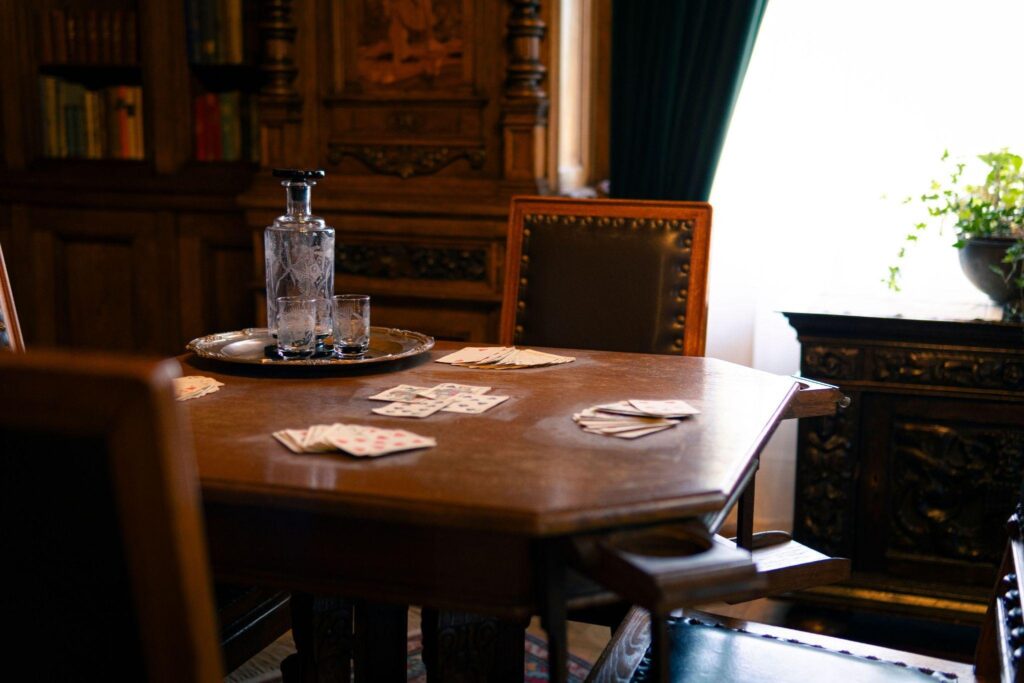
The room matters as much for online play as it did for the old poker night. A few simple choices make it easier to keep track of both time and money:
- Location. Pick a corner away from your work desk, so a session has a clear start and a clear end.
- Lighting. Light the screen area evenly and avoid a single bright source behind the monitor. Guidance from the Illuminating Engineering Society favors layered, glare-free light in homes, and a dimmable pendant or a desk lamp with a diffuser follows the same idea.
- Comfort. A supportive chair and a glass of water within reach help you stay alert without encouraging marathons.
- Visible limits. Keep a clock in plain view and the bankroll note beside the keyboard.
- Fewer distractions. Turn the television off and put the phone face down, since small lapses add up on decisions with thin margins.
If friends join in, put the screen where everyone can see it and agree on individual limits at the start, the same way a poker host fixes the buy-in. Multiplayer formats such as Blackjack X from Pragmatic Play Live seat several players at one table, with chat and a Bet Behind option, so the group can follow the same cards together.
Set a time limit as well as a money limit. Ninety minutes is plenty for most players, since decision quality tends to slip long before the bankroll runs out. Blackjack rewards structure at the table and in the room around it, so plan both before the first hand and the evening will run at a pace and cost you chose in advance.