(photo credit: Microsoft Stock Images)
Patient intake is often the first meaningful interaction between a healthcare organization and a new patient. A well-organized intake process improves efficiency, reduces administrative delays, and helps clinical staff begin appointments with accurate information. For healthcare businesses, thoughtful preparation also supports better communication, fewer documentation errors, and a more positive patient experience.
Successful patient intake begins long before someone arrives at the front desk. Preparing forms, verifying information, and creating consistent workflows allow healthcare teams to spend less time resolving administrative issues and more time focusing on patient care.
Gather Information Before Arrival
Collecting patient information before the appointment reduces congestion during check-in and gives staff more time to review important details. Demographic information, insurance data, medical history, medication lists, allergies, and consent forms can often be completed electronically before the visit.
Providing patients with clear instructions also improves completion rates. Appointment reminders should explain which documents to bring, how to complete any digital paperwork, and what to expect upon arrival. When expectations are communicated early, patients are more likely to arrive prepared. Reviewing submitted information before the appointment allows staff to identify missing details while there is still time to contact the patient for clarification.
Standardize Internal Workflows
Consistency is one of the most important parts of an effective intake process. Every member of the administrative team should follow the same procedures for verifying patient identity, confirming insurance coverage, collecting signatures, and documenting medical information.
Standardized checklists reduce the likelihood of missed steps and help new employees learn established procedures more quickly. Clearly defining responsibilities between reception staff, billing personnel, and clinical teams also minimizes duplicate work and improves communication throughout the office. Organizations should periodically review these workflows to identify unnecessary steps that increase wait times or create bottlenecks during busy periods.
Protect Sensitive Information
Patient intake involves collecting highly sensitive personal and medical information, making data security an important operational priority. Healthcare organizations should establish clear procedures for handling both paper and electronic records while limiting access to authorized personnel.
Secure document storage, encrypted communication methods, and routine staff training help reduce the risk of unauthorized access. Organizations that exchange digital files may also incorporate secure tools such as Open PGP Studio to help protect sensitive information during file transfers and document sharing. Strong security practices support regulatory compliance while building patient confidence that personal information is being handled responsibly.
Improve Communication Throughout the Visit
An effective intake process depends on clear communication between patients and staff. Administrative employees should explain forms using simple language, answer questions patiently, and notify clinical teams of any updates before the appointment begins.
Technology can also improve communication by providing automated appointment reminders, digital check-in options, and online patient portals where individuals can update information before future visits. These tools reduce repetitive paperwork while helping records remain current. Listening carefully to patient concerns during intake may also identify issues that require additional attention before the clinical visit begins.
Review and Refine the Process Regularly
Patient intake should be evaluated on an ongoing basis rather than remaining unchanged for years. Tracking average check-in times, incomplete forms, insurance verification issues, and patient feedback helps identify opportunities for improvement.
Staff input is equally valuable because front desk employees often recognize recurring obstacles that affect workflow. Small adjustments, such as simplifying forms or improving appointment instructions, can significantly improve efficiency over time.
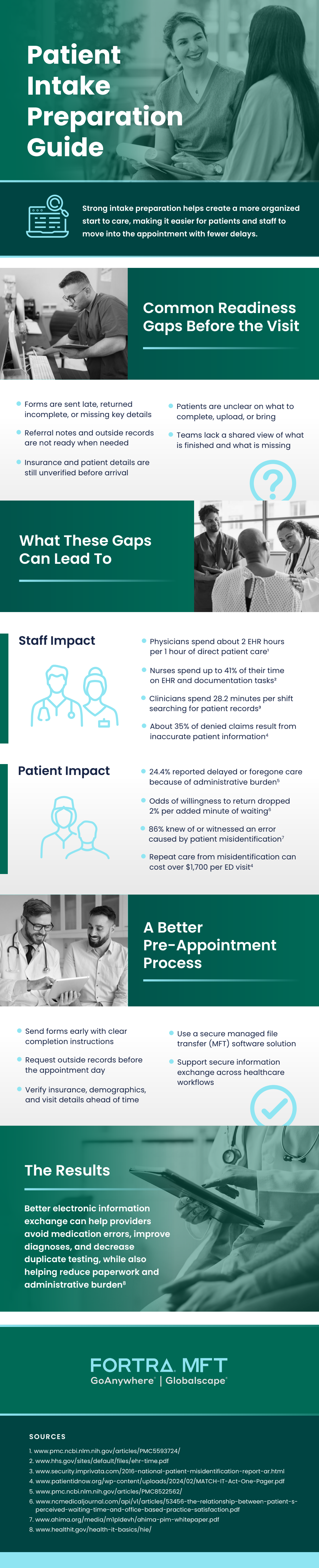
A well-prepared patient intake process benefits both healthcare organizations and the people they serve. Accurate information, consistent procedures, secure data management, and effective communication help reduce administrative burdens while supporting smoother appointments. Investing in these foundational processes creates a more efficient operation and allows healthcare teams to focus on delivering high-quality patient care. To learn more, check out the infographic below.