(photo credit: Microsoft Stock Images)
International relocation creates opportunities for career growth, business expansion, and cultural experiences, but it also introduces practical challenges that require careful planning. Moving to another country affects finances, legal documentation, housing, healthcare, taxation, and family life. Individuals and organizations that prepare for these changes early are often better positioned to make the transition smoother and more successful. A structured relocation plan helps reduce disruptions while allowing expats to focus on building their new personal and professional lives.
Managing Legal and Immigration Requirements
Visa applications, work permits, residency documents, and local registration requirements often vary significantly between countries. Missing paperwork or misunderstanding deadlines can delay employment or create legal complications after arrival.
Expats should review immigration requirements well before relocating and maintain organized records of passports, employment contracts, educational credentials, and other supporting documents. Employers also benefit from assigning dedicated personnel to monitor compliance throughout the relocation process. Staying informed about changing immigration policies helps prevent unexpected delays.
Adapting to Financial Systems
Relocating internationally usually involves adjusting to a new banking system, currency, and cost of living. Opening local bank accounts, establishing credit history, and learning payment methods may take time.
Creating a realistic budget before relocating helps families prepare for housing deposits, transportation costs, healthcare expenses, and daily living needs. Comparing living expenses between the home country and destination also provides a clearer picture of expected financial changes. Maintaining an emergency fund is especially valuable during the first several months after arrival.
Understanding Tax Responsibilities
International assignments often create tax obligations in more than one country. Income reporting requirements, tax treaties, retirement contributions, and residency rules may all affect an expat’s financial situation.
Many internationally mobile professionals work with expat tax professionals to better understand reporting obligations, minimize compliance risks, and coordinate tax planning across multiple jurisdictions. Seeking qualified guidance early helps reduce the likelihood of filing errors or unexpected liabilities. Maintaining organized financial records throughout the year also simplifies tax preparation.
Finding Suitable Housing
Housing is one of the largest decisions during an international move. Neighborhood safety, commuting distance, school availability, and access to healthcare all influence long-term satisfaction.
Whenever possible, researching neighborhoods before arrival allows families to compare rental markets and understand local lease requirements. Temporary housing may also provide flexibility while permanent accommodations are selected. Reading lease agreements carefully and confirming utility arrangements before signing can help avoid misunderstandings after moving in.
Adjusting to Workplace Culture
Professional expectations often differ across countries. Communication styles, meeting etiquette, decision-making, and management structures may vary significantly from previous work environments.
Observing workplace customs, asking respectful questions, and remaining open to different approaches help expats adapt more quickly. Employers can also support successful integration by providing cultural orientation and mentorship during the first months of employment. Strong communication with colleagues helps establish trust while reducing misunderstandings.
Supporting Family Members
Family adjustment plays an important role in relocation success. Spouses, partners, and children may face different challenges as they adapt to new schools, communities, healthcare systems, and daily routines.
Researching educational options, community organizations, and recreational activities before relocating can make the transition easier for every family member. Maintaining regular communication about expectations and concerns also helps families work together through periods of adjustment. Building local social connections often reduces feelings of isolation and supports long-term well-being.
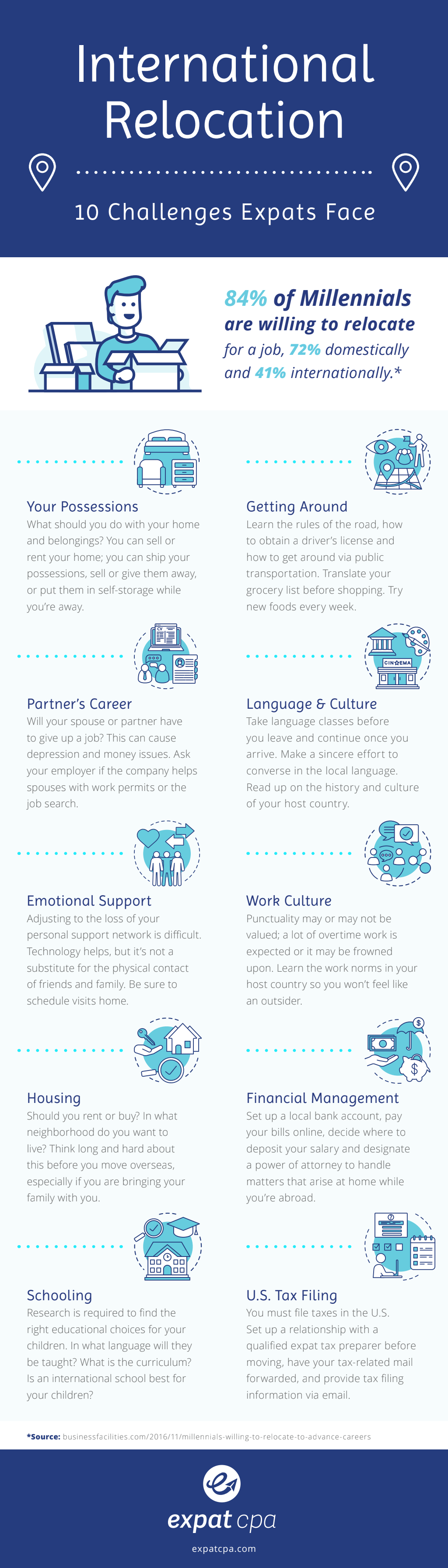
International relocation involves much more than moving personal belongings from one country to another. Legal preparation, financial planning, housing decisions, tax compliance, workplace adaptation, and family support all contribute to a successful experience. Individuals and businesses that prepare carefully before relocation are better equipped to reduce disruptions, manage unexpected challenges, and build a strong foundation for long-term personal and professional success abroad. Check out the infographic below for more information.