(photo credit: Microsoft Stock Images)
Running a business while supporting a family requires thoughtful financial planning. Unlike traditional employees, self-employed professionals often experience fluctuating income, greater tax responsibilities, and the need to provide their own benefits. Creating a structured financial plan helps families manage uncertainty, prepare for unexpected expenses, and build long-term stability without sacrificing business growth.
Build a Budget Around Variable Income
Income can vary from month to month because of seasonal demand, client payment schedules, or changing workloads. Instead of building a household budget around the highest earning months, calculate an average monthly income based on previous financial records.
Essential expenses such as housing, utilities, insurance, food, and debt payments should receive priority. Any remaining income can then be allocated to discretionary spending, savings, or business investments. Maintaining a monthly cash flow report helps identify spending trends and makes it easier to adjust the budget before financial challenges become larger concerns.
Separate Business and Household Finances
One of the most important financial practices for self-employed families is keeping business and personal finances separate. Dedicated checking accounts, business credit cards, and accounting software simplify bookkeeping while creating a clearer picture of business performance.
Accurate financial records also make tax preparation more efficient and provide valuable information when applying for financing or evaluating business growth opportunities. Regular reconciliation of bank accounts helps identify errors early and improves overall financial organization.
Prepare for Taxes Throughout the Year
Taxes can create financial stress if planning is delayed until filing season. Self-employed individuals are generally responsible for estimated tax payments, making regular tax planning an essential part of financial management.
Setting aside a percentage of every payment received into a separate savings account helps ensure funds remain available when tax deadlines arrive. Working with a qualified accountant can also help identify available deductions while maintaining compliance with tax regulations.
Protect Your Family Financially
Financial planning extends beyond budgeting and taxes. Families should also evaluate insurance needs as income, assets, and responsibilities change over time.
Comparing life insurance quotes online can help identify coverage options that provide financial protection for dependents while fitting within the family’s overall budget. Disability insurance, health insurance, and business liability coverage may also play important roles in protecting household finances from unexpected events.
Build Emergency and Retirement Savings
Emergency savings provide valuable financial flexibility during slower business periods, unexpected repairs, or temporary income interruptions. Many financial professionals recommend maintaining several months of essential living expenses in an accessible emergency fund.
Retirement planning deserves equal attention. Self-employed individuals often have access to retirement accounts that offer tax advantages while supporting long-term financial goals. Contributing consistently, even during periods of fluctuating income, helps create steady progress over time. Annual reviews of retirement contributions and investment strategies help keep long-term goals aligned with changing financial circumstances.
Review Financial Goals Regularly
Business success and family needs naturally change over time. Reviewing financial plans at least once each year helps ensure budgets, savings goals, insurance coverage, and investment strategies continue supporting current priorities.
Major life events such as expanding a business, purchasing a home, welcoming children, or preparing for college expenses often require adjustments to financial planning. Scheduled reviews also create opportunities to identify unnecessary expenses and redirect resources toward higher priorities. Open communication between family members about financial goals encourages better decision-making and reduces misunderstandings about spending, saving, and future planning.
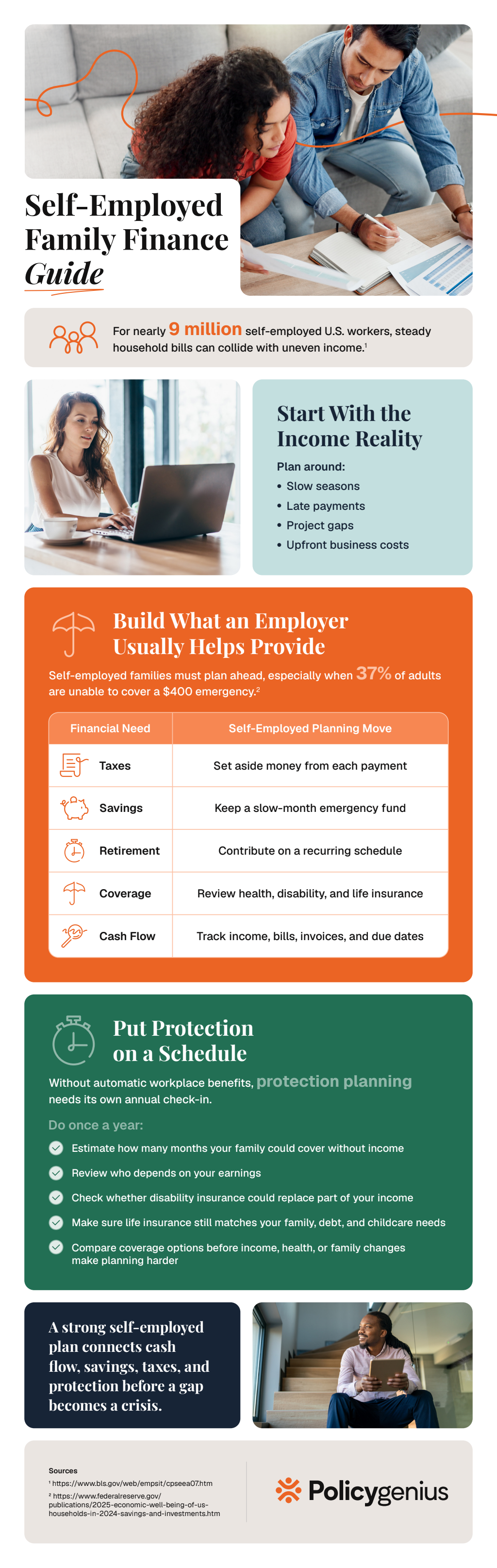
Financial success for self-employed families depends on preparation, organization, and consistent review. A realistic budget, separate financial accounts, ongoing tax planning, appropriate insurance coverage, emergency savings, and retirement contributions all work together to strengthen long-term stability. Families who regularly evaluate their financial plans are better positioned to adapt to changing business conditions while protecting both their household finances and future opportunities. Look over the infographic below to learn more.