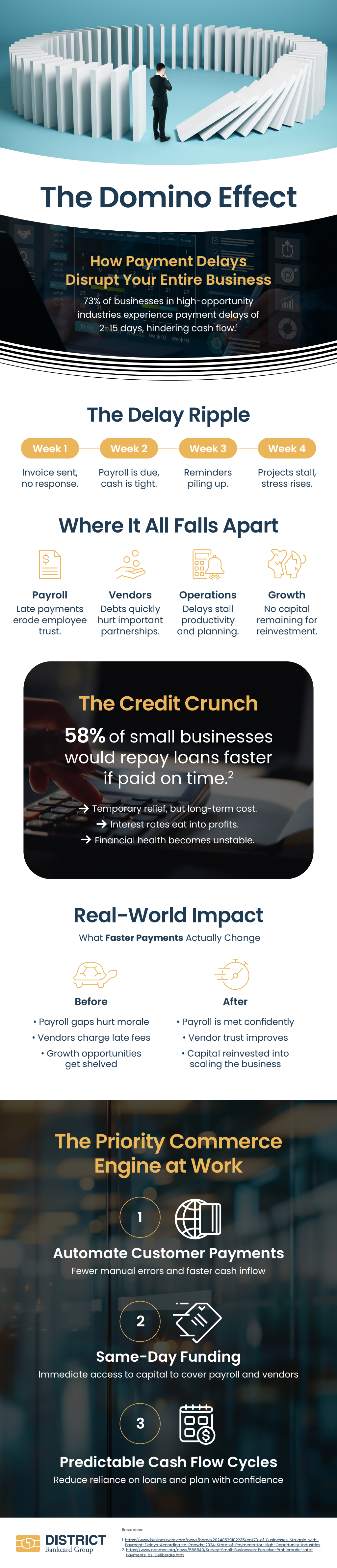
Cash flow is often described as the lifeblood of a business, but that phrase can feel abstract until payments slow down. When invoices linger unpaid or processing timelines stretch longer than expected, the effects spread quickly. Payment delays do more than interrupt accounting workflows. They influence staffing decisions, supplier relationships, customer service, and long-term planning. Understanding how delayed payments disrupt operations helps leaders prioritize systems and policies that protect stability.
Cash Flow Strain at the Core
The most immediate impact of late payments appears in cash flow. Businesses rely on predictable income to cover fixed expenses such as rent, utilities, payroll, and insurance. When expected funds do not arrive on time, leaders may need to dip into reserves or credit lines to keep operations running.
This reactive approach increases financial pressure. Interest costs grow, and financial flexibility shrinks. Even profitable companies can face short-term risk when cash inflows fail to align with outgoing obligations.
Payroll and Workforce Impact
Employees expect consistent pay schedules. When cash flow tightens, payroll becomes harder to manage, especially for small and mid-sized organizations. Delays may limit overtime approval, slow hiring plans, or reduce training budgets.
Over time, uncertainty affects morale. Teams may feel less secure about the organization’s stability, which can lead to disengagement or turnover. Replacing experienced staff costs far more than preventing payment disruptions in the first place.
Supplier and Vendor Relationships
Late payments do not exist in isolation. Vendors and suppliers depend on timely compensation to manage their own operations. When payments arrive late, trust erodes.
Suppliers may respond by shortening payment terms, increasing prices, or prioritizing other customers. In some cases, services pause until balances are settled. These responses can disrupt production schedules and delivery timelines, compounding operational stress.
Operational Delays and Missed Opportunities
When funds are tied up in unpaid invoices, businesses may postpone investments. Equipment upgrades, software improvements, and marketing initiatives often rely on available cash.
Delayed decisions slow growth. Competitors with smoother payment cycles can move faster, secure better partnerships, or expand into new markets while others wait for funds to clear.
Administrative Burden and Hidden Costs
Chasing late payments consumes time. Finance teams spend hours sending reminders, reconciling accounts, and resolving disputes. That time could be used for forecasting, analysis, or process improvement.
Manual follow-up also increases the risk of error. Inconsistent records and miscommunication add further delays. Over time, administrative inefficiency becomes a quiet but costly drain on productivity.
Customer Experience Consequences
Payment issues can affect customers even when they are not directly responsible for delays. Cash flow strain may limit inventory availability or slow service delivery. Support teams working under financial pressure may face staffing shortages or system limitations.
In regulated or public sector environments, delayed reimbursements or approvals can ripple outward. For organizations involved in payment processing for government programs, extended timelines may affect compliance planning and resource allocation across departments.
Strategic Planning Challenges
Reliable data drives strategy. Payment delays distort financial reporting by creating gaps between revenue recognition and actual cash availability. Leaders may hesitate to commit to long-term plans without confidence in incoming funds.
Budgeting becomes reactive instead of proactive. This uncertainty makes it harder to set realistic goals, forecast growth, or communicate expectations to stakeholders.
Risk Management and Compliance Exposure
Extended payment cycles can increase risk exposure. Late payments may lead to missed tax obligations, delayed filings, or breaches of contractual terms. Each misstep carries potential penalties or reputational harm.
Strong payment practices support compliance by keeping financial records current and predictable. Weak practices invite scrutiny and stress.
Building Resilience Against Delays
Preventing payment disruptions requires clear policies and efficient systems. Automated invoicing, clear payment terms, and regular communication reduce confusion. Monitoring payment trends helps identify chronic issues before they escalate.
Diversifying revenue streams also adds protection. Relying heavily on a small number of payers increases vulnerability when delays occur. Broader customer bases spread risk more evenly.
Payment delays rarely remain a financial issue. They touch every part of an organization, from employee confidence to supplier reliability and strategic growth. Businesses that treat payment efficiency as an operational priority create stronger foundations for stability. By reducing delays and improving visibility, organizations gain the freedom to focus on progress rather than recovery. Check out the infographic below for more information.