

Picture yourself clicking an About page. Row one shows a crisp studio portrait, row two a dimly lit selfie, row three a hastily cropped vacation shot. Before you read a single mission-statement word, your gut whispers, Are they as uneven in their work as they are in their photos?
We judge fast online—within 100 milliseconds, studies say—and those first seconds decide whether clients lean in or click away. When headshots feel uneven, trust seeps out, brand identity blurs, and revenue quietly erodes. In the pages ahead, we’ll show how harmonised portraits boost credibility, rally your team, and even lift sales, plus practical fixes any company can adopt.
The First Impression Lands in 100 Milliseconds
Open any team page and your brain judges before you blink. Researchers in Cognition & Emotion found that viewers form trust decisions in about 100 milliseconds (2012), roughly one-tenth of a second—one quick heartbeat.
When every headshot shares polish and framing, that instant works for you. Visitors sense order, care, and credibility. Their shoulders relax and they keep scrolling.
Show a collage of mismatched selfies and the opposite happens. Doubt flickers. If the photo quality feels erratic, visitors assume project quality is too. They close the tab, opportunity gone.
We spend heavily on logos, color palettes, and UX tweaks, yet the human face appears first in the visual hierarchy. It is the “digital handshake” that precedes every proposal, demo, or funding pitch.
Consistency is not cosmetic; it is the fastest trust trigger your brand controls. In the next section we’ll connect that split-second reaction to measurable gains in brand recall and revenue.
Unified Brand Identity Across Every Face
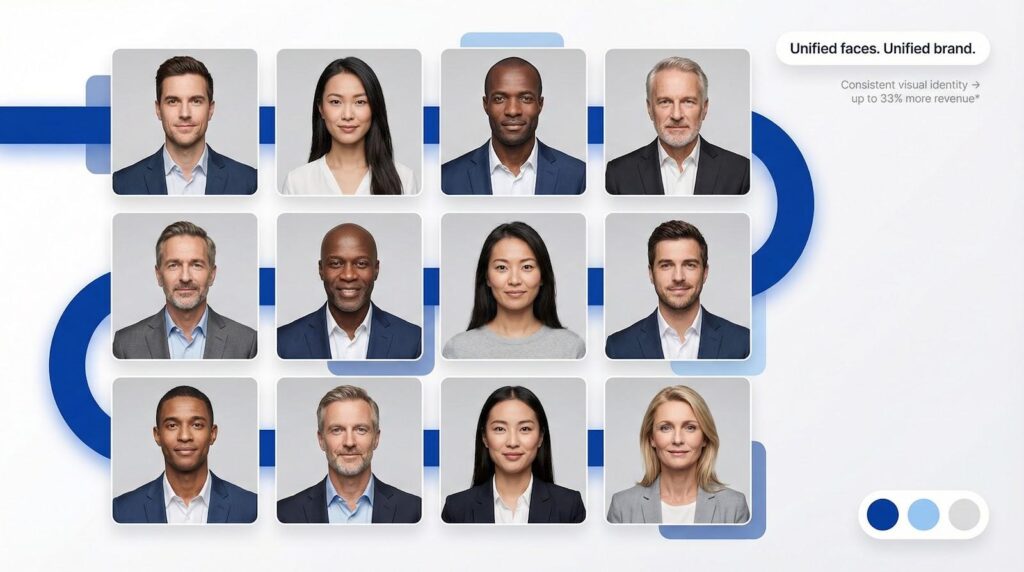
Visual consistency signals brand cohesion.
Branding is more than logos and color swatches. It lives in every pixel you publish, including the portraits that greet buyers, recruits, and journalists.
When each headshot shares lighting, background, and framing, your people create a visual thread that ties the brand together. Visitors feel that unity at once, the same way they recognize a swoosh or golden arches.
Data backs the instinct. A Lucidpress study reported that companies with consistent presentation across images, tone, and design increase revenue by up to 33 percent. Buyers remember what they recognize, and they recognize what they see repeated.
Uniform headshots turn individual faces into reinforcing cues. One glance at a speaker bio or sales deck and the viewer thinks, Yes, that’s them again. Recognition becomes recall, and recall turns into trust-driven action.
The Hidden Costs of Inconsistency
An uneven wall of portraits does more than look sloppy. It plants a quiet question: If the team can’t align a photo, can they align a project?
That doubt travels fast. Prospects hesitate to book the demo, investors pause before signing the term sheet, and revenue leaks from the funnel day after day.
Mixed visuals also muddle brand voice. A CEO in a polished studio shot beside an engineer in a hoodie selfie leaves outsiders guessing which vibe defines the company. Brand personality blurs, and unclear brands seldom earn premium rates.
Outdated images create another setback. When a client meets someone who looks nothing like their picture, trust cracks before introductions finish. Restoring credibility costs time and money.
Recruiting feels the hit as well. Top-tier candidates judge culture in seconds. A careers page full of grainy phone photos hints that corners get cut elsewhere, so talent scrolls past.
All this erosion hides in plain sight, line by line on the P&L. Consistency isn’t vanity; it’s preventive maintenance for your reputation and revenue. In the next section we’ll show how polished headshots deliver measurable external wins.
One quick remedy is an AI headshot service such as InstaHeadshots. The platform delivers up to 100 studio-quality portraits per employee in roughly 15 minutes, with packages starting around $59—about one-tenth the cost and days faster than the average studio shoot.
Swap out the weakest photos first and you’ll seal that credibility leak before the next prospect even opens your About page.
Building Trust and Credibility With Clients and Partners
People trust what looks professional. Show them a grid of clean, evenly lit faces and they’ll assume the same rigor applies to your code, contracts, or clinical trials.
The numbers back up that instinct. LinkedIn’s data shows profiles with a professional photo attract 21 times more views and nine times more connection requests. Extend that lift across an entire sales or leadership team and you gain a compounding edge in every outreach cycle.
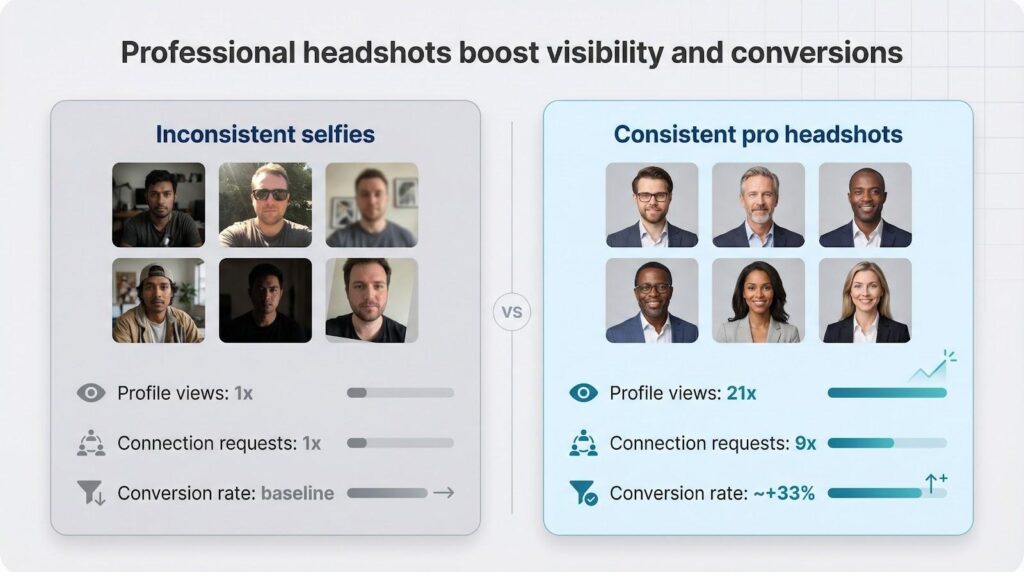
Credibility also converts. Nielsen Norman Group research found that websites featuring authentic, high-quality team images raise conversion rates by roughly one-third. Prospects linger longer, fill out forms, and respond to proposals because the people behind the product feel real and reliable.
Picture two consulting firms with identical slide decks. One displays a quilt of mismatched selfies; the other, a cohesive gallery of confident professionals. Which team would you invite to pitch your board? In deal rooms across industries, that silent comparison happens every day.
Consistent headshots give you the benefit of the doubt before the first handshake. Trust earned early lightens the load for every sales call, partnership negotiation, and investor meeting that follows.
Team Morale and Unity: Internal Benefits of Consistent Headshots
Consistency does more than impress outsiders; it nurtures pride on the inside. When employees see polished portraits lined up with equal care—intern beside CTO—they feel valued and on the same playing field.
That shared presentation works like a digital jersey. It says, We belong to one team, no matter where we work or what time zone Slack buzzes. Remote staff, in particular, gain a visual anchor that shortens the distance between home offices and headquarters.
Psychologists link visibility to engagement: people contribute more when they recognize themselves in the brand story. Give them a headshot they’re proud to add on LinkedIn and they’ll act as ambassadors, sharing your logo with new networks at no cost.
There’s also a subtle inclusion dividend. Standardized lighting and framing let every individual’s personality and background shine without distraction. The message becomes, Our diversity thrives under one cohesive banner.
Investing in great photos is an investment in culture. It tells every hire—seasoned executive or summer intern—that the company cares enough to put its people in the best light. Pride rises, turnover dips, and the echo of that positivity reaches customers long before the next marketing campaign.
Employer Branding and Recruiting Advantages
Great candidates start their research long before an interview. They scan LinkedIn, scroll the Careers page, and decide whether the faces they see feel like future colleagues.
A wall of cohesive, current headshots sends a clear message: this company sweats the details and invests in its people. That quality hints at equally thoughtful onboarding, growth paths, and culture. High performers notice and lean in.
Grainy selfies or missing photos create the opposite signal. If a firm overlooks something as visible as its own portraits, what else slips through? Talented prospects move on, and the cost of vacancy climbs.
Uniform images also spotlight diversity without distraction. When lighting, framing, and backgrounds match, each person’s story stands out on equal footing. Candidates of all backgrounds can picture themselves belonging, which widens your talent funnel.
Numbers back this up. Glassdoor reports that 75 percent of job seekers consider an employer’s brand before applying, and LinkedIn says companies with a strong brand see 50 percent more qualified applicants.
In a tight labor market, every edge matters. A polished visual identity turns browsers into applicants and applicants into advocates who tell friends, You should check out this team. Your recruiting budget stays flat, yet pipeline quality rises.
Logistical Challenges to Consistency (and How to Overcome Them)
The coordination problem.
The vision is simple: every employee, one matching portrait. The reality gets messy fast.
Teams stretch across offices, time zones, and continents. Calendars clash. Marketing books a Tuesday shoot, but sales is at a trade show and engineering works nights.
Without a plan, you end up with a photo patchwork from whatever camera was handy that day. Uniformity disappears before the shutter clicks.
Treat headshots like any critical deliverable. Pick a window, lock it on the company calendar months ahead, and set reminder nudges as you would for a product launch.
For satellite offices or hybrid staff, schedule a roaming photographer in the same week or ship a portable backdrop and lighting kit with clear setup instructions. Consistency depends on capturing everyone within a tight time frame while the style guide is fresh in mind.
Nail the coordination, and tasks like editing, approvals, and publishing flow with far fewer surprises.
Solutions for Consistency: Traditional vs. Tech Approaches
Professional photo shoots: the gold-standard baseline.
Nothing tops a seasoned photographer who guides every pose, light, and lens. A single on-site shoot locks in uniform backgrounds, angles, and expressions that AI or DIY setups still try to match.
The playbook is simple. Turn a conference room into a mini studio with a neutral backdrop, key light, and fill. Schedule teammates in five-minute blocks and treat the session like an all-hands priority, not a perk. Share a brief style guide—solid colors, minimal patterns, business-ready attire—so wardrobe supports facial clarity rather than steals attention.
A pro will coach posture and fine-tune chins or shoulders, details that separate good from great. They also deliver consistent post-processing: identical crops, balanced skin tones, and the exact color temperature your brand palette calls for.
Cost often worries finance teams, but the math helps. A full-day shoot for 50 employees may run a few thousand dollars, roughly the price of one trade-show booth. Unlike that booth, the photos work every hour across web, pitch decks, and press kits. ROI grows with each click on your About page.
Locking in a pristine baseline also simplifies future updates. When you later use AI or a remote freelancer, you already have a visual yardstick everyone can match.
Style Guidelines: The Playbook That Locks Consistency
Uniform headshots start with a written rulebook. A clear style guide removes guesswork for photographers, AI tools, and teammates who snap last-minute updates.
Begin with the big three: background, lighting, and framing. If the backdrop is soft gray, list the exact RGB value so studios on three continents match it. Specify one key light at 45 degrees for flattering shadows, and require a head-and-shoulders crop that leaves equal space above the hairline.
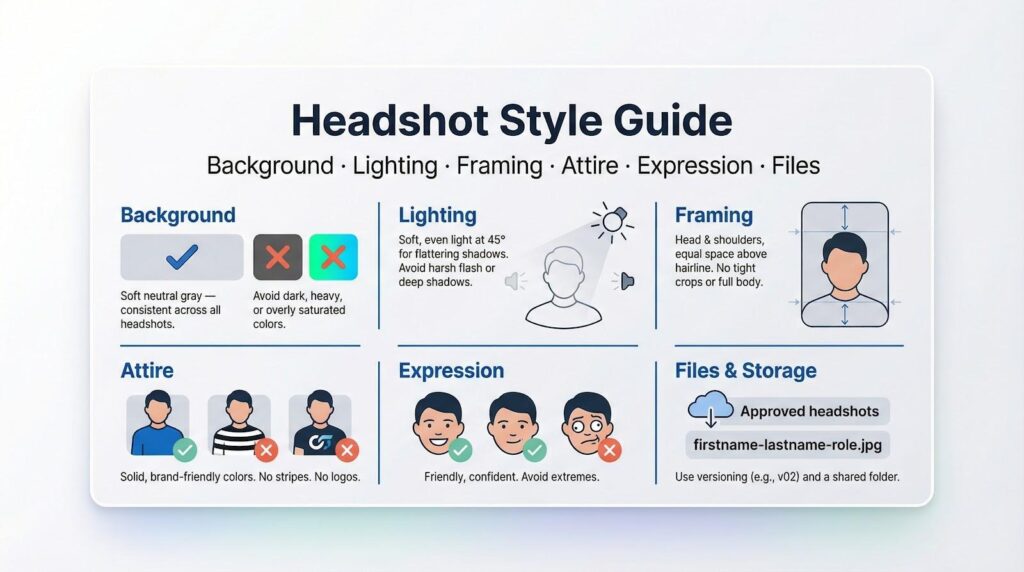
Tackle attire next. Recommend solid, brand-friendly colors and ban loud patterns that pull attention from faces. A single line such as “no logos, no stripes, no green unless it’s in the brand palette” eliminates dozens of retake emails.
Spell out expression guidelines too. Decide whether your culture favors open-mouth smiles or a calm, confident look. Consistency here keeps a team page from feeling like a yearbook collage.
Finally, standardize file names and storage. Centralize approved images in a shared drive with version control so marketing, HR, and PR all pull from the same source. That small administrative step stops rogue uploads and keeps the latest photo visible everywhere from Slack to the press kit.
With a style guide in place, you build a repeatable system anyone can follow, even as headcount and locations multiply.
Using Technology: AI Headshots for Distributed Teams
Traditional shoots excel, but they strain when half your staff works from home or on another continent. AI-powered headshot generators now turn a casual selfie into a studio-grade portrait in minutes.
Tools such as InstaHeadshots analyze facial structure, relight the image, and place it on your chosen backdrop while matching the crop and color profile in your style guide. Remote hires no longer wait months for the next photographer visit; they upload a phone photo on day one and appear on the team page by day three.
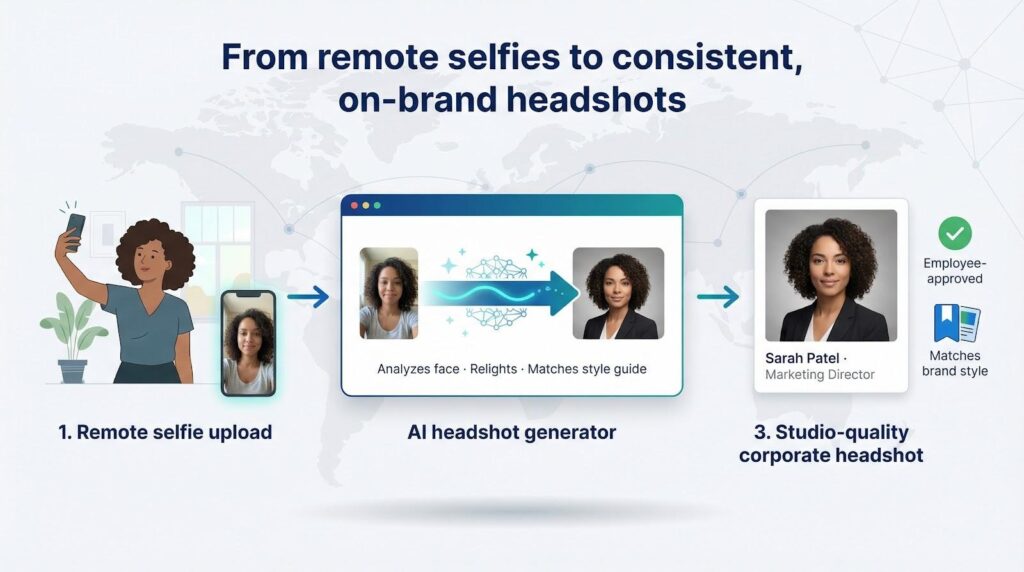
Speed and scale lead the list of benefits, and cost follows close behind. Per-image pricing can be as low as five to ten dollars, freeing budget for product launches or salary bumps.
Authenticity, however, needs attention. Over-smoothed skin or cartoonish eye sparkle can erode the trust you’re working to build. Mitigate that risk with a simple two-step policy: first, require employees to approve the AI output before it goes live; second, keep editing parameters locked to “natural.” The goal is consistency, not virtual cosplay.
Conclusion
When used thoughtfully, AI complements your gold-standard baseline, fills gaps, handles quick refreshes, and keeps fast-growing teams visually in sync without extra logistics.