(photo credit: Microsoft Stock Images)
Grant funding helps nonprofit organizations deliver services, expand programs, and address community needs. However, receiving a grant does not mean an organization can immediately spend the money however it chooses. Funding often comes with restrictions, reporting requirements, and specific payment schedules. For nonprofit leaders, knowing how grant dollars move from approval to program delivery is essential for maintaining financial stability and meeting funder expectations.
Grant Approval and Funding Agreements
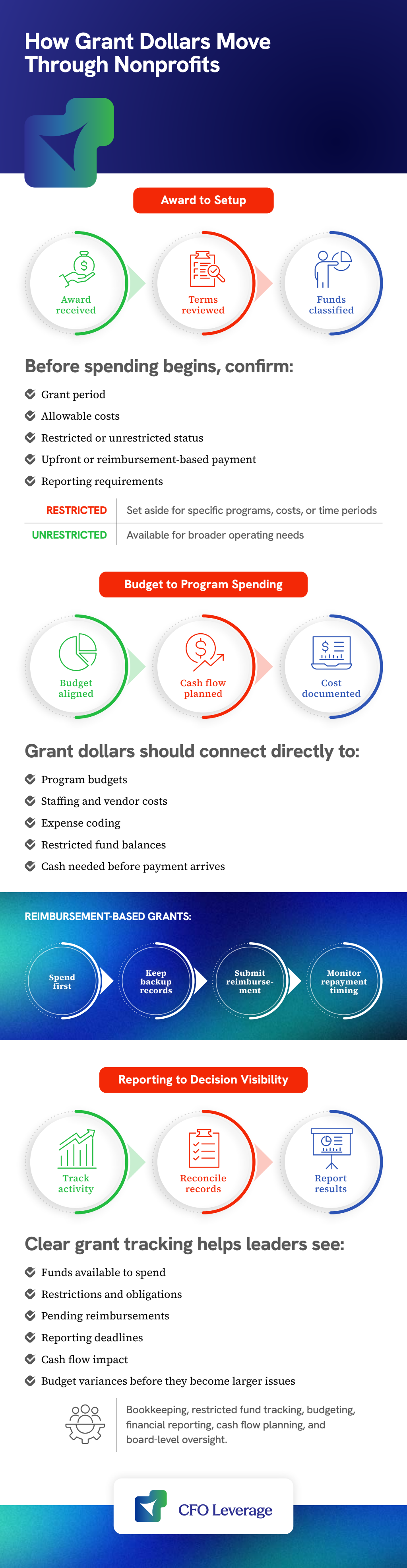
The process begins when a nonprofit receives notification that its grant application has been approved. Before accepting the award, leadership should carefully review the funding agreement.
This document typically identifies the award amount, approved activities, spending restrictions, reporting deadlines, and grant period. Some funders also establish performance targets or require matching contributions. For example, a nonprofit receiving $100,000 for workforce training may be required to spend the money on instructor salaries, training materials, and participant support. Using those funds for unrelated administrative expenses could violate the agreement.
How Grant Money Reaches the Organization
Grant payments generally follow one of several structures. Some funders provide an upfront payment, while others distribute funds in installments after specific milestones are completed.
Reimbursement grants operate differently. The nonprofit must first pay eligible expenses and then submit documentation to receive repayment. This arrangement can create cash flow challenges, particularly for smaller organizations with limited financial reserves.
Financial managers should compare expected payment dates with upcoming expenses. Maintaining sufficient unrestricted cash helps prevent delays in payroll, vendor payments, and program operations.
Tracking Restricted and Unrestricted Funds
Once grant money enters the organization’s accounts, it must be recorded accurately. Many grants carry donor-imposed restrictions that limit how funds can be used or when they can be spent.
Nonprofits typically track these funds through accounting systems that identify individual grants, programs, and expense categories. For example, an organization operating three grant-funded programs should be able to determine how much each program has received, spent, and committed.
A nonprofit financial service company may assist with grant accounting, financial reporting, and internal controls when an organization lacks sufficient accounting staff. Clear financial records help prevent accidental overspending and make funder reporting more manageable.
Allocating Expenses to Grant-Funded Programs
Grant expenses must generally be reasonable, properly documented, and consistent with the funding agreement. Common eligible expenses include employee compensation, supplies, equipment, and approved program activities.
Shared costs require particular attention. An employee working across multiple programs cannot automatically have their entire salary charged to one grant. Organizations should establish consistent methods for allocating shared expenses based on actual program use or other appropriate measures. For federal awards, additional cost principles and documentation requirements may apply. Financial teams should verify applicable rules before charging expenses.
Reporting Spending and Program Results
Funders often require financial reports showing how grant dollars were spent. These reports may include expense summaries, supporting documentation, and comparisons against approved budgets.
Many grants also require program performance information. A workforce development nonprofit might report enrollment numbers, training completion rates, and employment outcomes.
Financial and program staff should coordinate regularly to confirm that reported spending aligns with actual activities. Missing documentation or inconsistent reporting can delay future payments and create compliance concerns.
Closing Out a Grant Responsibly
Grant management continues after program activities end. Organizations may need to submit final reports, reconcile expenses, and return unused funds when required by the agreement.
Accounting staff should verify that outstanding invoices are recorded and all expenditures fall within the authorized grant period. Records must also be retained according to applicable funder requirements. Federal grants may have specific retention periods and audit obligations.
Grant dollars move through several financial and operational stages before producing measurable community benefits. Organizations that establish clear procedures can reduce compliance risks, manage cash flow more effectively, and demonstrate how financial resources support their missions. Look over the infographic below to learn more.