

The Evolution of Technology in Houses of Worship
Churches across the country are experiencing a fundamental shift in how they approach technology and ministry.
What once seemed like optional enhancements to worship experiences has become central to how congregations connect, engage, and expand their reach beyond physical buildings.
This transformation reflects changing expectations from congregation members who experience high-quality media everywhere they go.
Modern worshippers expect technology that feels seamless, intentional, and enhances rather than distracts from spiritual connection.
Key Takeaways
- Integrated audiovisual systems eliminate operational friction and enable sophisticated worship experiences that disconnected equipment cannot achieve, while volunteer teams gain clarity and confidence from simplified, centralized control.
Churches should prioritize infrastructure that connects audio, video, lighting, and control systems rather than accumulating standalone solutions that require constant manual coordination. - Broadcast-quality infrastructure supports both in-person and online worship experiences equally well, allowing churches to reach growing remote audiences without compromising the sanctuary experience.
Cinematic production approaches have become standard expectations, with professional cameras, lighting, and audio infrastructure enabling worship that feels immersive and intentional regardless of viewing location. - Long-term planning and strategic partnerships produce better outcomes than equipment-focused decisions, with churches that invest in vision and partner selection achieving greater returns on technology investments.
Technology partners who understand worship environments and volunteer operational realities help design systems that scale as ministries grow and enable new ministry opportunities over time.
Understanding Today’s Worship Environment
Contemporary worship requires churches to balance multiple simultaneous priorities in ways that would have seemed impossible just five years ago.
Ministries must deliver compelling in-person experiences while simultaneously broadcasting to online audiences, managing volunteers, and supporting diverse ministry programs across campus.
The pressure to do everything well at once creates operational complexity that demands thoughtful technology choices.
Without proper planning, churches quickly accumulate disconnected equipment that creates more friction than freedom in daily operations.
The Challenge of Managing Multiple Audiences
Congregations now expect consistent quality whether they participate in person or join remotely through streams.
Creating experiences that feel equally engaging for in-person and online participants requires technical sophistication that extends far beyond traditional worship setup.
Many churches struggle because they invested in equipment designed for in-person worship but lack the infrastructure to deliver broadcast-quality experiences.
This gap creates frustration among remote viewers and limits the church’s ability to reach growing online communities.
Volunteer Teams and Operational Complexity
Most churches depend on dedicated volunteers to operate audio, video, lighting, and streaming systems during services.
The challenge intensifies as technology becomes more sophisticated, creating a gap between the complexity of modern systems and the operational capacity of volunteer-driven teams.
Without proper training, intuitive interfaces, and simplified workflows, volunteer teams become bottlenecks that prevent churches from maximizing their technology investments.
The best systems balance professional capabilities with ease of use that empowers volunteers rather than intimidating them.
The Power of Integrated Audiovisual Systems
Modern churches increasingly recognize that fragmented technology solutions create operational nightmares rather than worshipful experiences.
When audio systems do not sync with video distribution, and video does not connect with lighting and control systems, staff spend valuable time troubleshooting instead of focusing on ministry.
Integrated systems that connect all audiovisual components through centralized control platforms eliminate coordination friction and create seamless experiences.
This approach reduces the burden on volunteer teams while enabling more sophisticated productions than disconnected equipment could ever achieve.
Building for Broadcast and Streaming
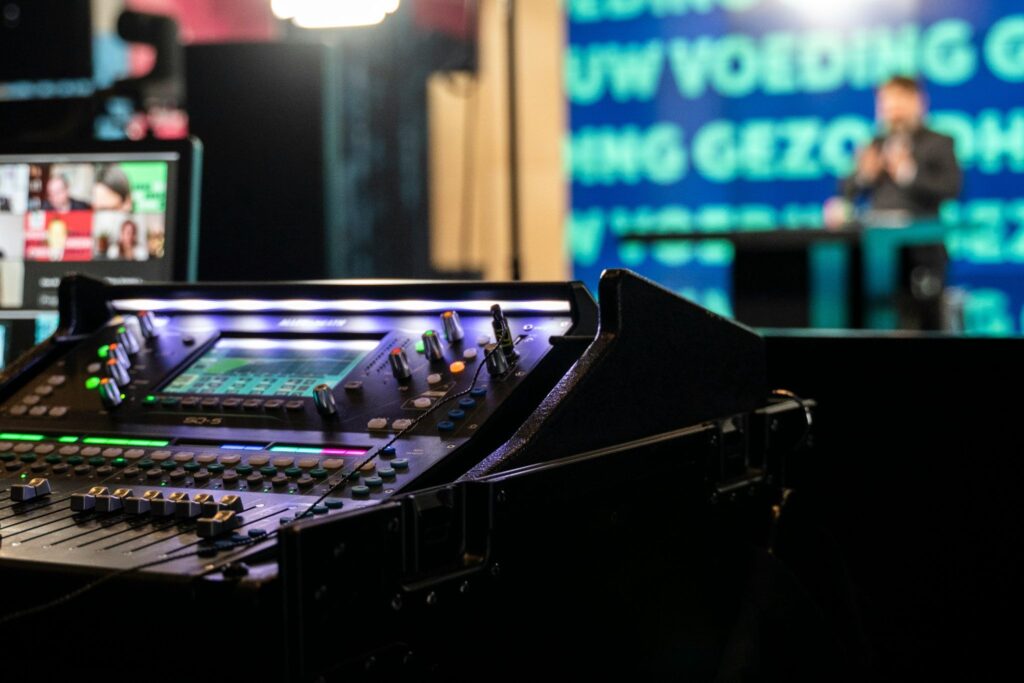
The shift toward cinematic worship experiences has fundamentally changed how churches design their sanctuaries and invest in production capabilities.
Rather than thinking of streaming as a side project, forward-thinking churches now integrate broadcast-quality workflows into their core worship environment.
This requires investment in professional cameras, lighting systems, audio infrastructure, and video distribution that supports multiple viewing angles and production approaches.
The good news is that modern broadcast technology integrates seamlessly into worship spaces without creating the clinical feeling of a television studio.
Sound System Design: More Important Than You Think
Audio quality remains one of the most overlooked factors in worship environments, yet it has tremendous impact on engagement and experience.
When congregation members struggle to hear clearly or notice audio inconsistencies, it pulls attention away from worship and onto technology problems.
Modern church sound systems should support crystal-clear speech reproduction for sermons and announcements while delivering balanced, immersive worship music.
The foundation for this capability begins with careful acoustic design and strategic speaker placement rather than simply buying the biggest amplifier available.
Creating Campus-Wide Consistency
Larger churches and multi-location ministries face the additional challenge of delivering consistent experiences across multiple worship spaces simultaneously.
Without integrated infrastructure, achieving this consistency requires redundant equipment, inefficient workflows, and constant manual coordination.
Networked audiovisual systems with centralized control allow churches to maintain consistency across worship spaces while providing flexibility for specific needs.
This approach enables efficient content distribution, synchronized timing, and streamlined operations across the entire campus, which is exactly what modern church AV solutions are designed to accomplish.
The Role of Digital Signage and Video Walls
Beyond the sanctuary, modern churches use digital signage and video walls to communicate with congregation members throughout the campus.
These systems create visual continuity from the parking lot through fellowship areas, helping congregation members navigate and feel welcomed.
When integrated with core worship systems, digital signage becomes a powerful tool for announcing events, sharing messages, and reinforcing the worship theme throughout the facility.
The key is intentional design that supports communication goals rather than simply displaying screens everywhere.
Planning for Long-Term Growth and Evolution
Churches that succeed with technology investments typically begin with clear long-term vision rather than immediate equipment selection.
Understanding future growth, emerging ministry priorities, and evolving technology trends informs infrastructure decisions that remain relevant for years rather than becoming obsolete quickly.
Planning processes should explicitly address how systems will scale as the church grows, accommodate new ministry opportunities, and adapt to technology changes.
This forward-thinking approach prevents expensive rip-and-replace situations and protects technology investments over time.
Selecting the Right Technology Partner
The complexity of modern church AV infrastructure makes partnership selection critically important to long-term success.
Churches benefit from working with partners who understand worship environments, volunteer operational realities, and ministry growth trajectories.
The right technology partner bridges creative vision with technical execution, helping churches design systems that enable rather than complicate ministry.
These partners also provide ongoing support, ensuring systems continue working reliably as technology evolves and maintenance needs arise.
The Business Impact of Excellent Worship Technology
While ministry and spiritual impact should always be primary motivations, excellent church AV solutions also support practical business outcomes including improved attendance, increased giving, and stronger community engagement.
When people experience welcoming, technologically polished worship environments, they are more likely to return and invite others.
Online streams that feel professional and engaging extend the church’s reach exponentially, connecting with people who cannot attend in person due to health, distance, or other constraints.
This expanded audience creates growth opportunities that would be impossible without robust broadcast infrastructure.
Conclusion
Modern churches operate in a fundamentally different technological landscape than they did just a few years ago.
Congregation members expect sophisticated, intentional worship experiences that rival the quality of entertainment they consume everywhere else, while churches simultaneously serve growing online communities through streaming platforms.
Meeting these expectations requires more than purchasing equipment. It demands strategic thinking about integration, scalability, volunteer operations, and long-term growth.
Churches that invest in comprehensive planning, integrated infrastructure, and the right technology partnerships position themselves for sustainable success and expanding ministry impact.
The churches that are winning today recognize that technology serves ministry goals rather than existing for its own sake.
By prioritizing systems that enhance worship, empower volunteers, and extend reach to new audiences, churches create environments where people can connect meaningfully, engage fully, and experience worship that resonates deeply whether they are sitting in the sanctuary or joining from somewhere else entirely.
Frequently Asked Questions
What is the typical investment required for modern church AV solutions? Investment varies significantly based on sanctuary size, existing infrastructure, and desired capabilities, ranging from minor upgrades to comprehensive system overhauls.
Rather than focusing on total cost, churches should evaluate return on investment through improved worship experiences, expanded reach, and operational efficiency gains.
The most effective approach involves phased planning that prioritizes foundational infrastructure first, then adds capabilities over time as budget allows.
How can churches ensure their AV systems work well for both volunteers and professional staff? The best systems balance professional capabilities with intuitive interfaces that volunteers can operate confidently without extensive training.
Centralized control platforms, automated workflows, and simplified preset configurations help volunteer teams manage complex systems effectively.
Churches should specifically request training and documentation focused on common workflows rather than complete system manuals, making it practical for volunteer operators to succeed consistently.
Should churches prioritize in-person experience over streaming quality, or can systems serve both equally well? Modern architecture and equipment design allow churches to deliver excellent experiences in both contexts simultaneously.
The key is intentional system design that treats broadcast quality as a core requirement rather than an afterthought, with professional cameras, lighting, and audio infrastructure integrated into the worship environment.
When designed properly, broadcast-quality systems enhance the in-person experience through improved lighting and audio consistency while also serving remote viewers effectively.
What are the biggest mistakes churches make when upgrading their AV systems? The most common mistake is purchasing equipment before establishing a clear technology strategy, resulting in disconnected solutions that create more problems than they solve.
Churches often underinvest in audio infrastructure while overspending on video displays, despite audio quality having a greater impact on worship engagement.
Additionally, churches frequently fail to plan for training, ongoing maintenance, and technical support, leading to expensive equipment sitting unused or operating far below capacity.