
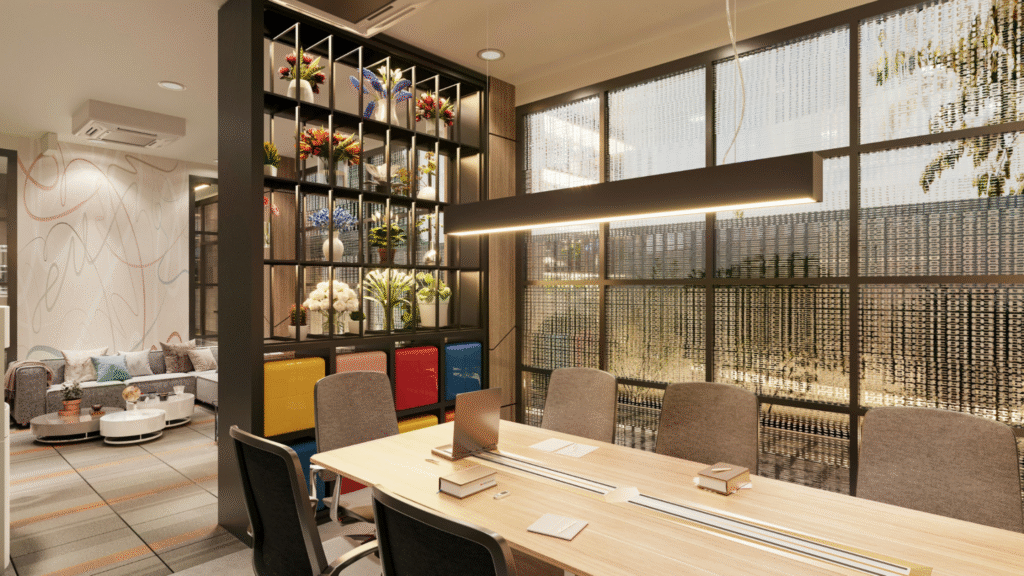
Work looks nothing like it did twenty years ago. Neither do the spaces built around it. This isn’t just an architectural thing, it’s deeply human. From rows of identical desks crammed under fluorescent lights to today’s sensor-embedded, neuro-inclusive environments, every shift in how offices look reflects something bigger: a shift in how people feel about work itself. Whether you’re rethinking a floor plan or just trying to build a team culture that survives past Q1, understanding this evolution gives you a serious edge.
From Factory Floors to Human Ecosystems: How We Got Here
Eight decades. That’s roughly how long this transformation has been unfolding, shaped by technology, cultural upheaval, and some genuinely hard lessons about what people need to do their best work.
Here’s a stat worth sitting with: Stanford’s Digital Economy Lab found in February 2024 that workers spending roughly two days per week in the office reported better work-life balance, higher job satisfaction, and lower feelings of isolation compared to both fully remote and fully onsite workers. Two days. Not five, not zero, two. That finding alone tells you how deeply workspace design is tangled up with human well-being.
If you want to see how far this thinking has traveled, go visit a co work space near me. Seriously. You’ll walk in expecting a desk and walk out genuinely rethinking what an office is supposed to do for people.
1950s–1980s: The Control Era Nobody Missed
Post-war offices were essentially Fordist factories in disguise. Rows of identical desks. Fluorescent lighting that hummed at you all day. Sealed environments that blocked out natural light in principle, because personal comfort wasn’t the point. Output was.
By the seventies and eighties, things started shifting toward status. Ergonomic furniture appeared. The cubicle was born. Then the eighties cranked everything up, metal finishes, bold colors, glass panels, and corporate hierarchy made visible through architecture. It was less an office and more a performance stage. Impressive, sure. Comfortable? Not exactly.
1990s–Early 2000s: Tearing Down Walls (Literally)
Organizations in the nineties got fed up with all those partitions. They started knocking them down in pursuit of something that had been missing: an actual human connection. Open-plan offices became gospel. The logic was simple: remove barriers, watch creativity flow.
Results were… mixed. Noise became a constant problem. Distraction was chronic. Workers traded cubicle-induced isolation for open-plan overstimulation. The office got more collaborative, sure, but nobody thought much about where people went when they needed to think.
Early 2000s–2010s: The Coworking Boom Changes Everything
Then something genuinely interesting happened. Freelancers, startups, and independents started pooling resources and sharing space, and suddenly offices felt like communities rather than holding pens. Flexible desks, informal layouts, shared kitchens that doubled as social hubs. The coworking model quietly rewrote the rulebook.
Remote work tools matured fast during this same window. The digital nomad wasn’t just a lifestyle choice anymore; it was a viable professional identity. For the first time, the office became somewhere you could choose to be. That distinction mattered enormously, even if most companies didn’t fully realize it yet.
The Pandemic: Everything Broke, Nothing Went Back
Kitchen tables became desks. Overnight. Teams adapted faster than anyone predicted. And when restrictions lifted, and companies tried to return to normal, the spaces were the same, but the people weren’t.
Offices designed around five full days of attendance sat awkwardly half-empty. Meeting rooms built for in-person groups suddenly had to accommodate half-remote, half-present teams. Nobody had a real plan. The accidental hybrid era had arrived, and most workplaces weren’t remotely ready for it.
That disruption didn’t just change where we work. It permanently resets what we expect from the spaces we return to.
What’s Actually Driving Modern Office Design Right Now
Okay, so the dust has mostly settled. What’s emerged isn’t just a set of aesthetic preferences; it’s a strategic rethink of what offices are actually for.
Hybrid-First as the Default Setting
Offices can no longer afford to be one-trick ponies. A single space needs to support a video call, a deep-focus solo work session, and a spontaneous brainstorm, sometimes within the same hour. Phone booths, focus rooms, and acoustically separated zones aren’t perks anymore. They’re the baseline infrastructure.
Neuro-Inclusive Design, Finally
Here’s something organizations are slowly waking up to: productivity starts neurologically. Quiet zones, sensory-neutral spaces, adjustable lighting, deliberate acoustic design, these aren’t premium add-ons for the especially sensitive. They’re how you build an office that works for everyone, not just the loudest people in the room.
Experiential Design That Actually Earns Attendance
The best offices today don’t rely on mandates to get people through the door. They earn it. Hospitality-inspired lounges, wellness pods, and social anchors, the goal is to make coming to the office feel like a genuine upgrade over sitting at home in your pajamas. Experience, not obligation, is the draw now.
Biophilic and Sustainable as Baseline
Natural materials, organic textures, modular partitions, transparent material sourcing, this isn’t a niche design philosophy anymore. It’s become the baseline language through which credible office design communicates that it takes people seriously.
Invisible Technology
The most impressive offices in 2026 don’t look impressive. They feel impressive. Wirelessly embedded power, acoustic zoning, sound-masking systems, smart environmental controls, all of it working quietly in the background, shaping your experience without demanding your attention. That restraint is harder to pull off than it sounds.
Where Offices Are Headed: Beyond 2026
The present is already interesting. The near future is genuinely exciting.
The Office as Destination
A striking 65% of organizations plan hybrid work environments in 2025, according to the Operations Council COO Outlook & Sentiment Study. That figure means one thing clearly: offices can no longer justify themselves through obligation. They need to earn attendance. Multi-use café areas, thoughtfully designed arrival moments, curated social spaces, these are becoming central to office strategy, not afterthoughts.
Modular Infrastructure That Moves With You
Magnetic wall systems, sliding partitions, furniture on rails, and the static floor plan are becoming obsolete. Tomorrow’s offices are living systems that reconfigure as fast as business needs do. No expensive renovations. No wasted real estate.
AI-Powered Everything (That You’ll Barely Notice)
Sensor-driven lighting, touchless environments, data-informed space allocation, the intelligent office will anticipate what you need before you’ve consciously registered needing it. The best AI integration won’t feel like technology. It’ll just feel like a space that gets you.
Storytelling-Driven Spaces
Here’s something that often gets overlooked in the rush toward smart technology: people don’t connect with sensors. They connect with stories. Spaces that communicate identity, through material choices, cultural references, and sensory detail, will outlast any spec-driven, generic layout. Characters aren’t decorative. It’s strategic.
Micro HQs and Outdoor Extensions
Smaller, character-rich headquarters are gaining serious momentum. Rooftop terraces, outdoor work zones, compact spaces built around depth rather than square footage, micro HQs are proving that intimacy and identity beat sprawl every time.
| Design Era | Primary Focus | Key Feature |
| 1950s–1980s | Control & hierarchy | Cubicles, fluorescent lighting |
| 1990s–2000s | Collaboration | Open-plan layouts |
| 2000s–2010s | Flexibility | Coworking, hot-desking |
| 2020–Present | Hybrid by design | Acoustic zoning, hybrid rooms |
| 2026 and Beyond | Experience & intelligence | AI integration, micro HQs |
Frequently Asked Questions
What are the biggest modern office design trends in 2026?
Neuro-inclusive layouts, biophilic materials, invisible technology, modular furniture, and hospitality-inspired experiential zones are reshaping what offices look and feel, like this year.
How do hybrid workspace trends affect productivity and well-being?
They provide focused quiet zones, collaborative spaces, and genuine scheduling flexibility, reducing stress, lowering isolation, and giving people real agency over how they work best.
What makes a workspace neuro-inclusive?
Sensory-neutral zones, adjustable lighting, and acoustic control that accommodate diverse cognitive needs, making offices genuinely accessible to everyone, not just extroverted personalities.
How does biophilic design actually help?
Natural materials, plants, and organic textures reduce stress, improve focus, and lift mood. People stay longer and work better. Simple as that.
What does “office as destination” actually mean?
It means employees choose to show up because the experience is worth it. Curated lounges, wellness spaces, and social anchors that home setups genuinely can’t replicate.
So What Does All This Actually Mean For You?
The evolution of modern workspaces has never been about architecture for its own sake. Every shift, from the cubicle to the coworking hub to the AI-integrated micro HQ, happened because people’s needs changed first, and spaces eventually caught up.
Here’s the honest takeaway: if your current office still feels like it was designed for 2015, it’s already costing you. Talent notices. Culture suffers. And the gap between where your space is and where it needs to be doesn’t close by itself.
Look at your space honestly. Embrace what the smartest designers and organizations are already doing. Don’t wait for the next disruption to force your hand, because it will come, and it won’t ask permission.